
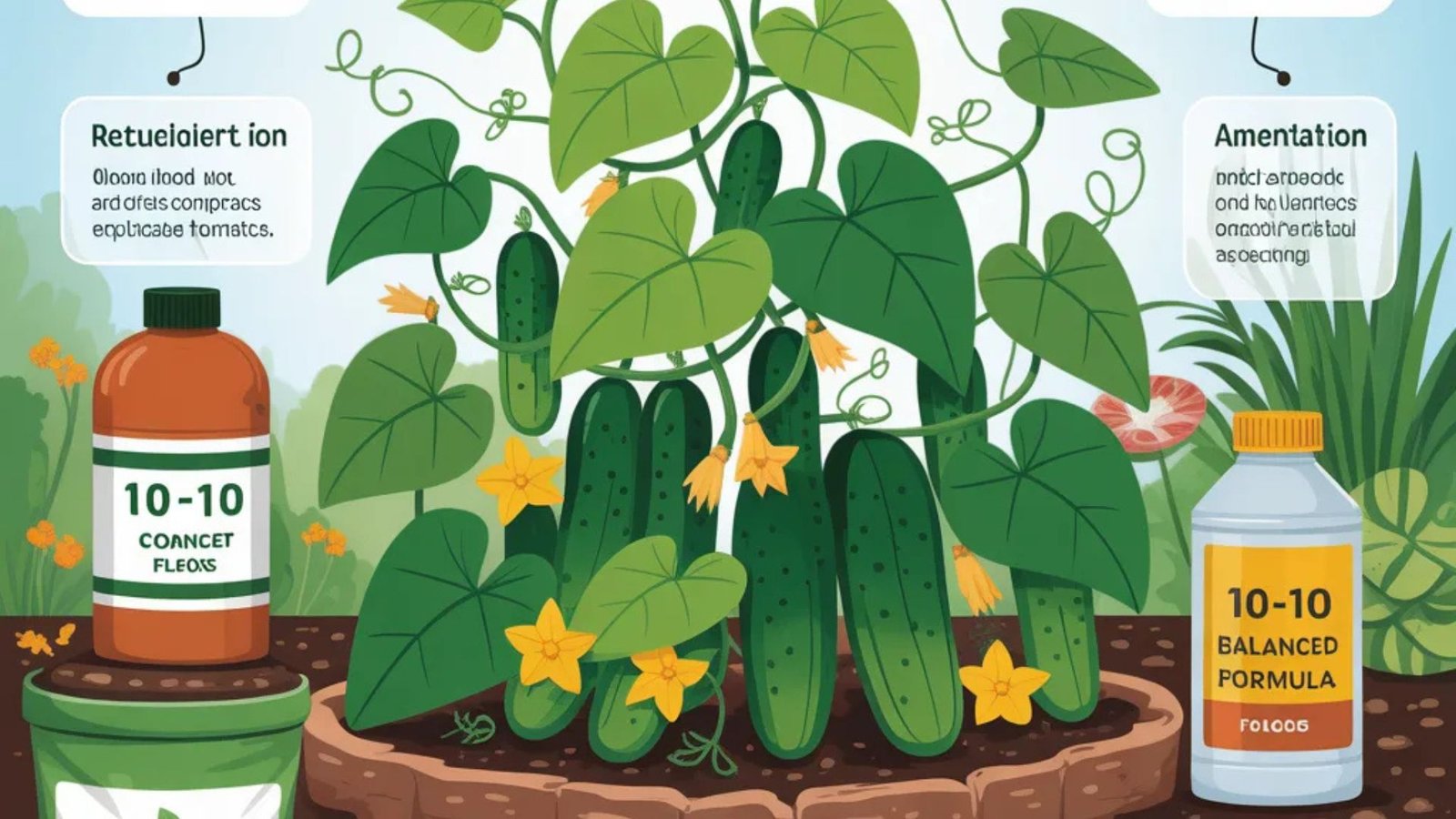
If you want a healthy garden, choosing the best fertilizer for cucumbers makes all the difference. Cucumbers grow fast, but they also need steady nutrition to stay strong and productive. The right feeding plan improves cucumber plant fertilizer results and supports better fruit quality. Many gardeners in the USA struggle because they ignore proper fertilizer for cucumber plants or use the wrong balance. A good mix of nutrients helps with strong roots, green vines, and better harvests. Whether you use organic fertilizer for cucumbers or synthetic options, the goal is the same, to boost growth and avoid weak plants. With the right care, you can easily improve your garden and enjoy fresh cucumbers all season long
Understanding Cucumber Nutrient Requirement
Cucumbers grow fast and drink nutrients like a thirsty sponge. They need steady food from the soil to support vines, flowers, and fruit. Without proper feeding, plants look weak and stop producing early. That’s why Fertilizer for cucumber plants plays a key role in every stage of growth.
Healthy cucumbers depend on a rich soil base. If the soil is poor, plants struggle even if you water them well. This is where Cucumber plant nutrition becomes the foundation of success in USA home gardens.
A simple comparison helps you understand better:
| Soil Condition | Plant Result |
|---|---|
| Rich soil | Strong vines and high yield |
| Poor soil | Weak growth and small fruits |
Good feeding builds Healthy cucumber vines that can support heavy fruit loads.
Essential Nutrients for Healthy Cucumber Growth
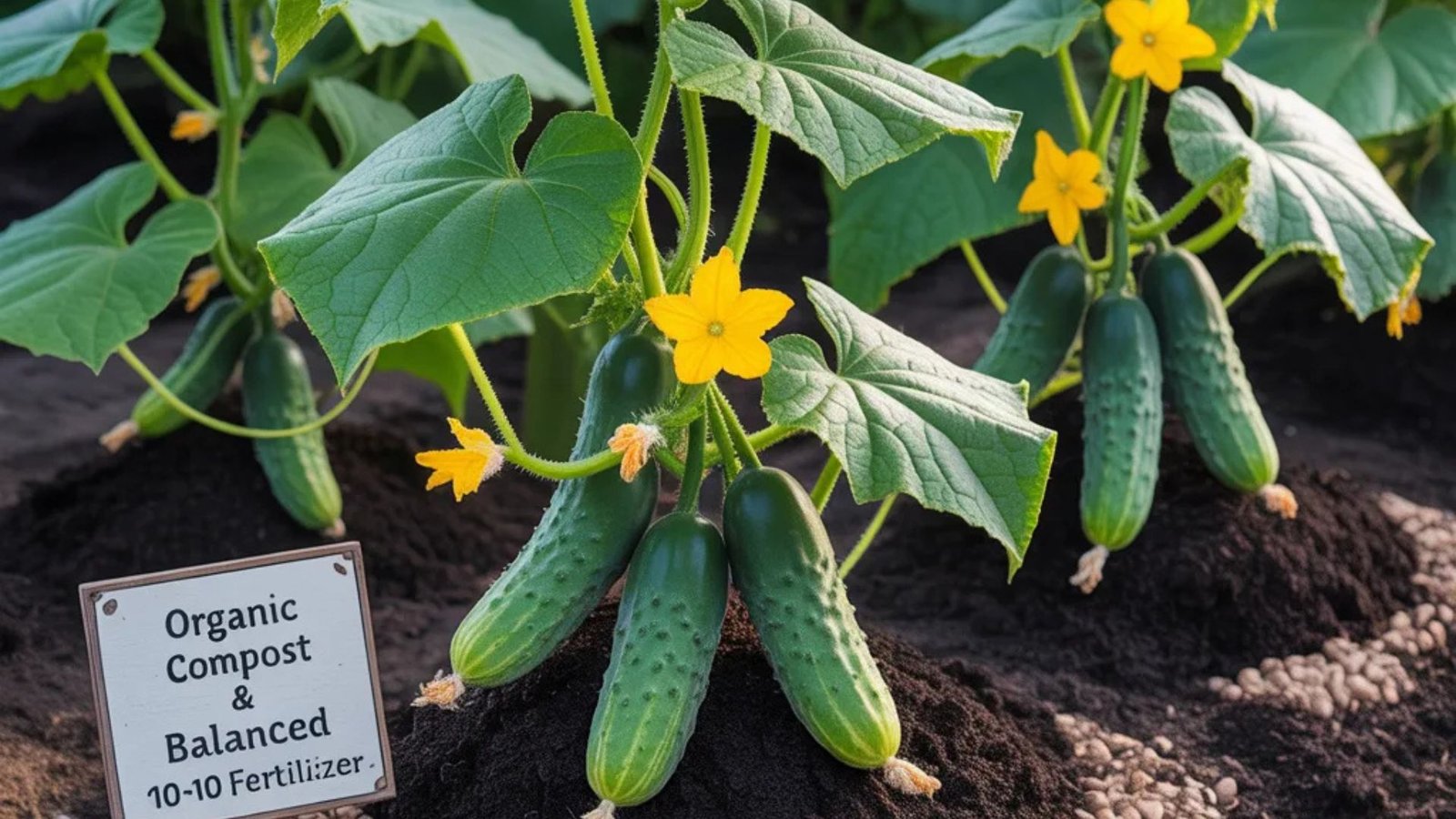
Cucumbers need a perfect mix of nutrients to grow well. Each nutrient plays a different role. If one is missing, the plant shows stress quickly. That is why Cucumber growth nutrients must always stay balanced.
Let’s break it down simply.
Nitrogen (N)
Nitrogen for cucumber growth is the main fuel for fast and leafy development. It supports strong vine growth and keeps the plant looking fresh and green. Without enough nitrogen, plants turn pale and weak. It also plays a big role in early-stage development. However, too much nitrogen can reduce fruit production.
Phosphorus (P)
Phosphorus for root development helps cucumbers build deep and strong roots. It supports early flowering and improves energy transfer inside the plant. Healthy phosphorus levels lead to better fruit setting. It is very important during early growth stages. Low phosphorus can slow down plant development.
Potassium (K)
Potassium for cucumber production improves fruit size, taste, and overall quality. It also strengthens the plant against diseases and stress. This nutrient helps regulate water inside plant cells. With enough potassium, cucumbers grow crisp and healthy. Deficiency often leads to weak and poor-quality fruits.
Secondary Nutrients and Micronutrients
Secondary nutrients and micronutrients like calcium, magnesium, and iron support overall plant health. Calcium strengthens cell walls and prevents fruit disorders. Magnesium helps in chlorophyll production for green leaves. Iron supports photosynthesis and energy creation. Without them, Nutrient deficiencies in cucumbers can quickly appear and reduce yield.
Types of Fertilizers for Cucumbers
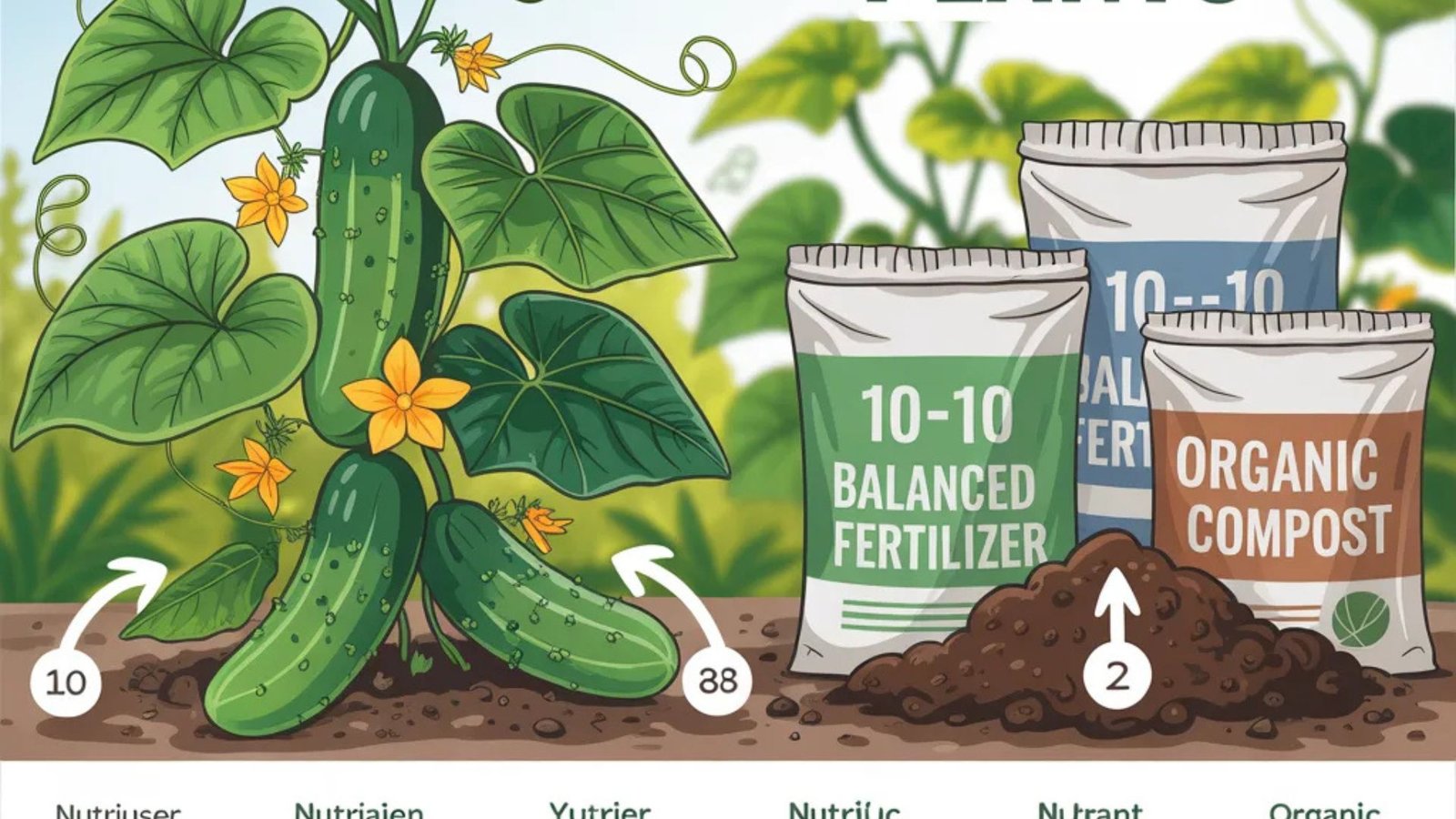
Cucumbers respond to different fertilizer types. Each one works differently depending on soil and stage. Choosing the right Fertilizer for cucumber plants improves cucumber plants growth speed and fruit quality.
Some fertilizers act fast while others feed slowly over time. That is why understanding your options matters.
Organic Fertilizers
Organic fertilizer for cucumbers improves soil naturally. It supports long-term growth and better soil life.
Synthetic Fertilizers
Synthetic fertilizer for cucumbers gives quick results. It is useful when plants need fast recovery.
Water-Soluble Fertilizers
Water-soluble fertilizer mixes with water and feeds plants quickly. It works best during active growth stages.
Slow-Release Fertilizers
A Slow-release fertilizer feeds plants slowly for weeks. It reduces the risk of overfeeding.
Here is a quick comparison:
| Type | Speed | Best Use |
|---|---|---|
| Organic | Slow | Long-term soil health |
| Synthetic | Fast | Quick nutrient boost |
| Liquid | Very fast | Growth stages |
| Slow-release | Steady | Low maintenance gardens |
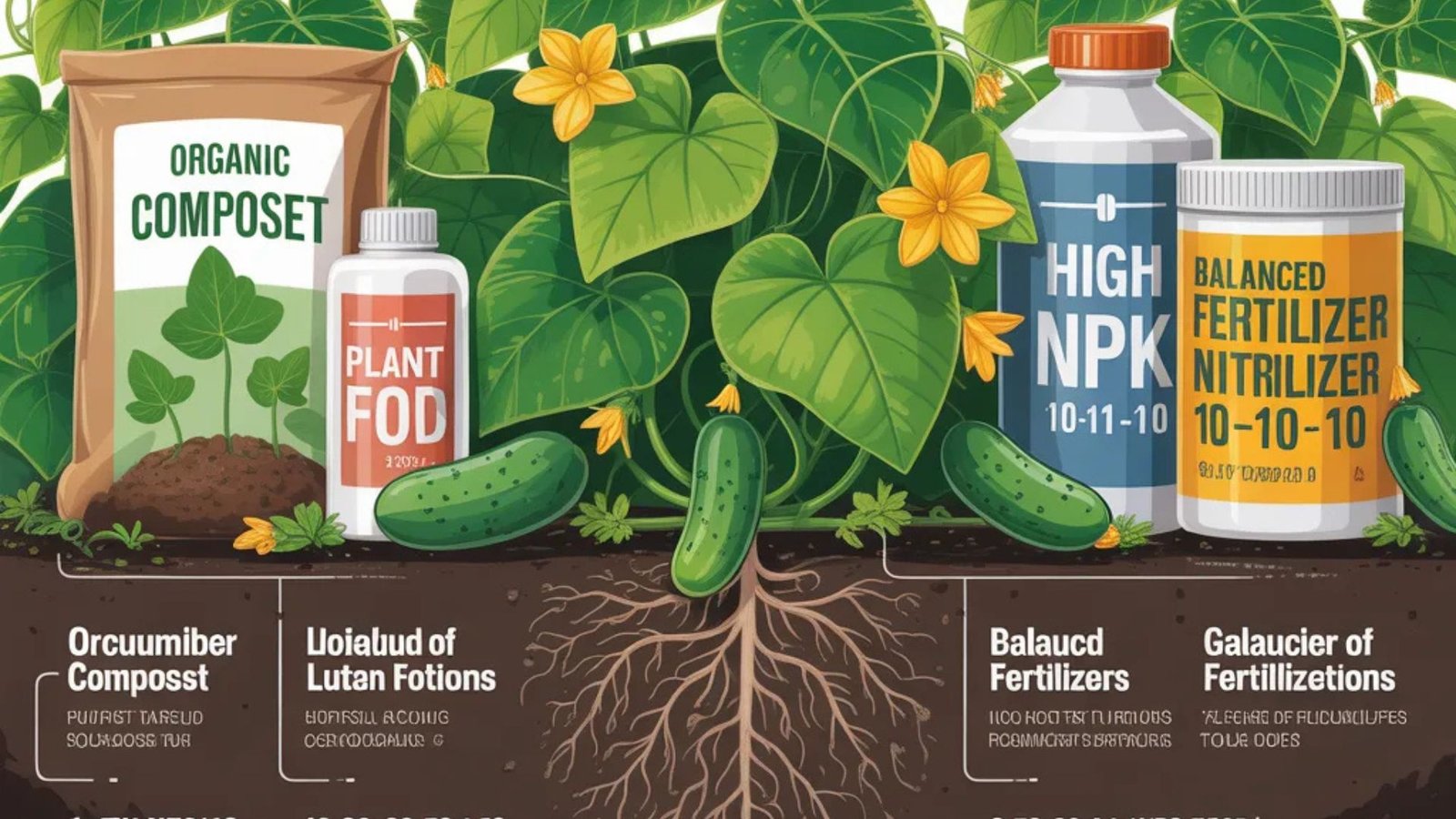
Best Organic Fertilizers for Cucumbers
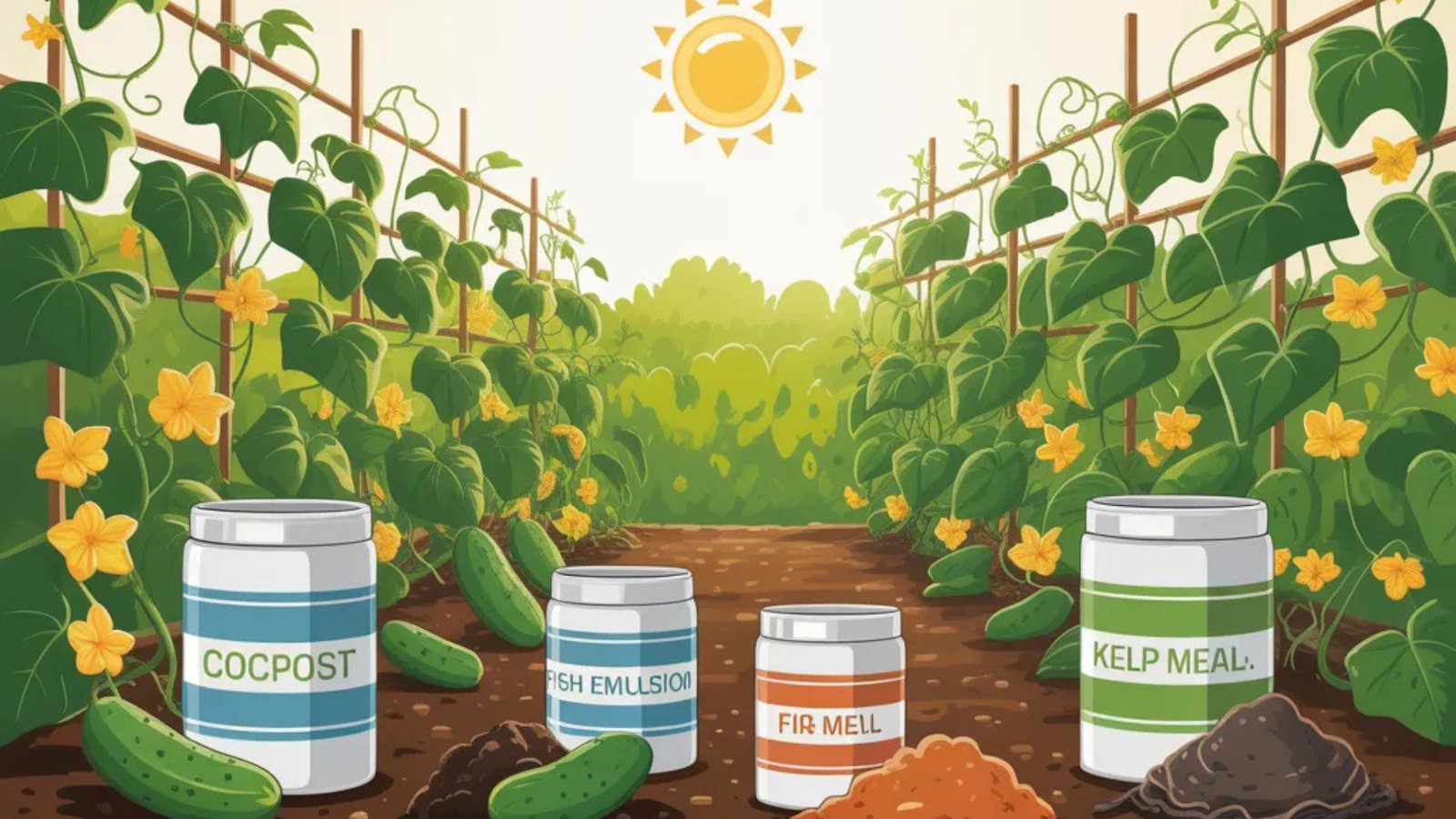
Organic feeding is popular in USA gardens. It improves soil health and supports natural growth. Many gardeners prefer best Compost for cucumbers because it builds long-term fertility.
Organic options also reduce chemical buildup and support best Organic gardening methods.
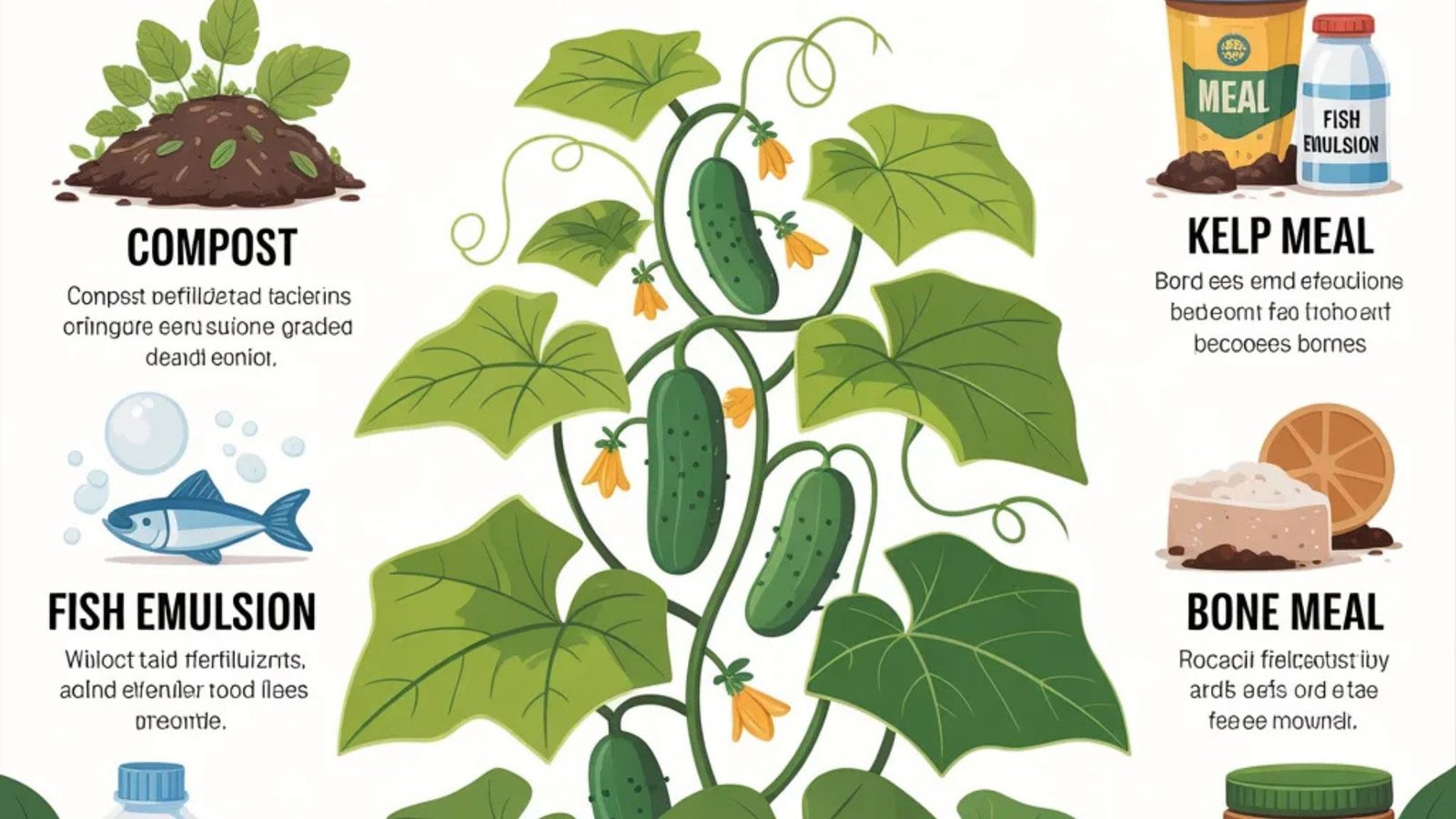
Compost
Compost improves soil texture and feeds microbes. It creates strong soil for steady growth.
Well-Rotted Manure
Manure for cucumber plants adds rich nutrients but must be aged properly to avoid burning roots.
Fish Emulsion
Fish emulsion gives fast nitrogen support and helps early vine growth.
Bone Meal
Bone meal supports flowering and root strength with phosphorus.
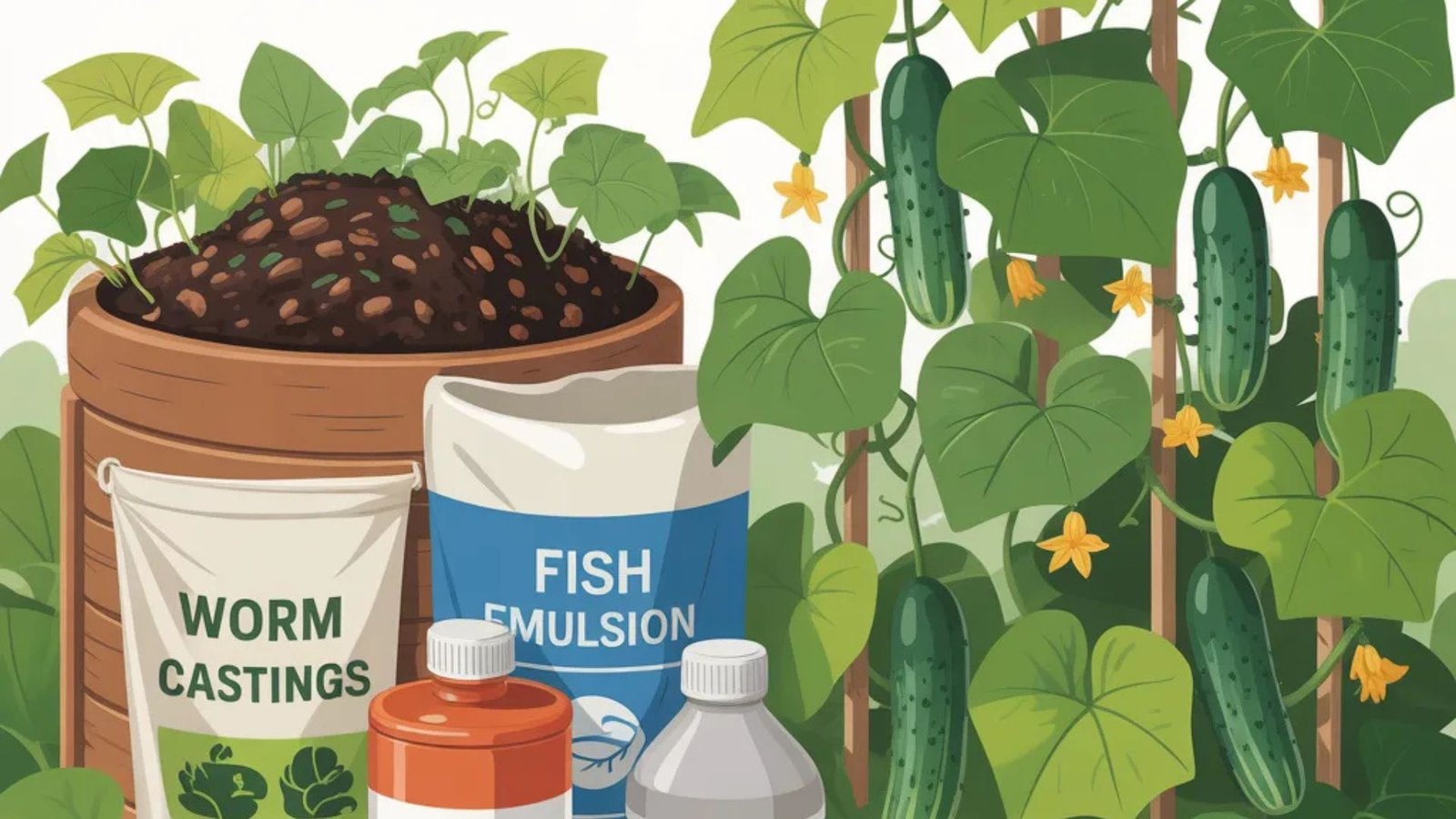
Worm Castings
Worm castings improve soil life and help nutrient absorption.
Best Synthetic Fertilizers for Cucumbers
Synthetic fertilizers help when plants need quick action. Many farmers in the USA use them for controlled feeding and high yield farming. A Balanced best fertilizer for cucumbers like 10-10-10 is common in early stages.
They work fast but must be used carefully to avoid damage.
1. Balanced NPK Fertilizers
These support early vine growth and strong development.
2. High-Potassium Fertilizers for Fruiting
A High potassium fertilizer improves fruit size and taste.
3. Liquid Fertilizers for Quick Results
Liquid Best fertilizer for cucumbers helps during stress or fast growth periods.
Soil Preparation and Pre-Planting Fertilization
Soil preparation decides everything. Without good soil, even strong fertilizer fails. This is why Soil testing before fertilizing is important before planting cucumbers.
Healthy soil gives plants a strong start and reduces future problems.
Improving soil includes adding compost, adjusting pH, and checking nutrients. Ideal Soil pH for cucumbers stays slightly acidic for best absorption.
Good soil creates strong roots and steady production.
When to Fertilize Cucumbers for Maximum Yield
Timing matters more than most gardeners think. Feeding at the wrong time can reduce production. A proper Cucumber feeding schedule helps plants grow steadily.
Each stage needs different nutrients for best results.
1. At Planting Time
Early feeding supports root development and early growth.
2. During Vegetative Growth
Focus on nitrogen for Green leafy growth and vine strength.
3. During Flowering
This stage needs nutrients that help Promote flowering and fruiting.
4. During Fruit Production
Use potassium-rich feeding to Increase cucumber yield and support fruit size.
How to Apply Fertilizer to Cucumber Plants
How you feed matters as much as what you feed. Poor application leads to weak results. Many gardeners use Side dressing cucumbers to keep nutrients close to roots.
Different methods help different needs.
1. Soil Drenching
Soil drenching means pouring liquid fertilizer directly into the soil around the roots. It allows quick absorption and fast nutrient delivery. This method helps plants recover quickly from stress. It works best during active growth stages.
2. Side Dressing
Side dressing uses granular fertilizer placed near the plant base in the soil. It releases nutrients slowly over time for steady feeding. This method supports long-term growth without shocking the plant. It is useful for strong and stable production.
3.Foliar Feeding
Foliar feeding means spraying diluted fertilizer directly on the leaves. Plants absorb nutrients quickly through leaf surfaces. It is helpful for fixing nutrient problems fast. This method works best in early morning or evening.
4. Container-Grown Cucumbers
Container-grown cucumbers need more frequent feeding because nutrients wash out quickly. Limited soil space cannot hold fertilizer for long. Regular feeding keeps plants healthy and productive. It helps maintain steady growth in pots or grow bags.
Signs of Nutrient Deficiencies in Cucumbers
Cucumber plants show stress quickly when nutrients are missing. You must watch for early signs to avoid damage. These symptoms often relate to Nutrient deficiencies in cucumbers.
Early action saves your harvest.
Yellow leaves often signal low nitrogen. Poor fruiting shows phosphorus issues. Weak vines may mean potassium deficiency. If ignored, yield drops quickly.
Common Fertilizing Mistakes and How to Avoid Them
Many gardeners make simple mistakes that reduce yield and weaken plants. One of the biggest issues is overfeeding cucumbers with the best fertilizer for cucumbers, which often leads to Signs of over-fertilization like burnt leaves, weak fruit, and poor flowering. Another common mistake is not using a proper fertilizer for cucumber plants, which creates uneven growth and low productivity.
Balance is everything in cucumber feeding. When you follow a proper plan for fertilizing cucumbers, you help the plant absorb nutrients at the right speed instead of shocking it with too much food at once.
Avoid using too much fertilizer at one time, and always check soil conditions before feeding. Skipping soil testing or using the wrong cucumber plant fertilizer often harms plants more than weak soil does. Good timing and steady feeding will help you grow healthier vines and improve your cucumber harvest.
Natural and Homemade Fertilizer Options for Cucumber
Many gardeners prefer DIY feeding methods because they are simple, cheap, and eco-friendly. A popular choice is Homemade fertilizer for cucumbers, which uses kitchen waste to support plant growth. Even the best fertilizer for cucumbers does not always need to be store-bought, especially when natural options work well in home gardens.
You can use banana peels, eggshells, and compost tea to feed your plants naturally. These materials slowly improve soil health and support steady nutrient release. When used correctly, this natural approach can work like a cucumber plant fertilizer that boosts long-term growth without chemicals.
Natural feeding also supports sustainable gardening and reduces chemical use in your soil. Many gardeners combine these methods with the best fertilizer for cucumbers to balance quick results and long-term soil health. This mix helps plants grow stronger, greener, and more productive over time.
Conclusion
The Best Fertilizer for Cucumbers: Grow Healthier Plants and Bigger Harvests is not just one product. It is a system of balance, timing, and soil care. When you understand nutrients, your plants respond with strong growth and high yield.
If you follow a smart feeding plan, your cucumbers will stay healthy, productive, and full of flavor. Gardening becomes easier, and results become more predictable.
In the end, the secret is simple. Feed your soil well, and your plants will reward you generously.
FAQ’s
Q1 : What helps cucumbers grow faster?
Consistent watering, warm sunlight, and a balanced feeding plan help cucumbers grow faster. Using a proper Q2:fertilizer for cucumber plants with good Cucumber growth nutrients also boosts strong vine development and higher yield.
Q3: Is 5-10-10 fertilizer good for cucumbers?
Yes, 5-10-10 is great for cucumbers, especially during flowering and fruiting stages. It supports Potassium for cucumber production and improves fruit quality, size, and taste.
Q4:What does Epsom salt do for cucumbers?
Epsom salt provides magnesium, which helps in chlorophyll production and greener leaves. It also improves nutrient absorption and reduces Nutrient deficiencies in cucumbers for healthier growth.