
Knowing how to pick pecans helps you enjoy better flavor and avoid wasting ripe nuts. Pecan trees give clear signs when they are ready, so timing plays a big role in successful harvesting. In every pecan orchard, farmers watch trees closely during the pecan harvest to protect quality and yield. With the right methods, harvesting pecans becomes simple and efficient, whether you collect nuts from the ground or shake branches gently. Understanding pecan nut quality also helps you choose the best nuts for eating or storing. When you learn how to pick pecans, you connect with nature and enjoy a richer, more rewarding harvest.
Introduction to Pecan Harvesting
The story of a successful pecan harvest begins long before nuts touch the ground. In every pecan orchard, farmers observe trees daily and prepare for harvesting pecans with patience and care. The goal is simple: protect pecan nut quality while maximizing results.
In modern agriculture, pecan tree harvesting blends tradition with science. Skilled pecan growers follow proven pecan farming techniques to improve productivity and reduce losses. When farmers understand the nut maturity stage, they achieve better results and stronger profits in the competitive pecan industry.
How Do Pecans Grow?
Pecan trees follow a slow and steady life cycle. During pecan tree cultivation, trees grow for several years before producing nuts. Healthy trees depend on soil, climate, and careful management to support consistent pecan nut production.
As nuts develop, farmers monitor the green husk turning brown and watch the husk cracking process closely. These changes signal that ripe pecans are approaching harvest. Different pecan nut varieties mature at slightly different times, which makes observation essential in every growing season.
When to Harvest Pecans
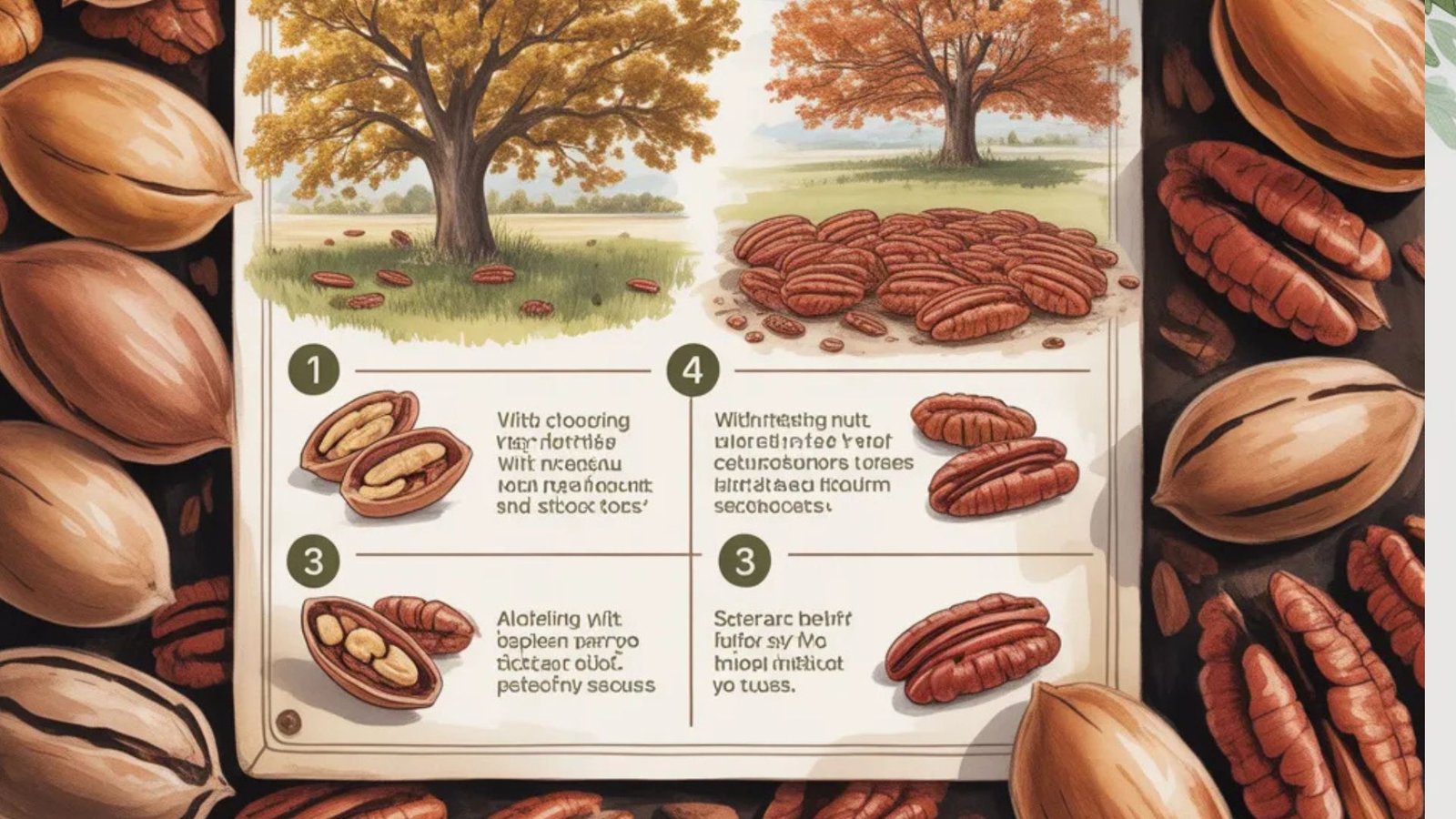
Timing defines success in the pecan nut season. The best moment for harvesting arrives during the fall harvest season, when trees reach the optimal harvest time. Farmers know the nuts are ready when they see the natural nut drop under healthy trees.
If harvesting happens too early, flavor and size suffer. If it happens too late, wet ground risk increases and quality declines. Understanding this balance protects pecan nut yield and ensures farmers deliver premium nuts to the market.
| Sign of Readiness | Meaning for Harvest |
| Husk cracking | Nuts are mature |
| Natural nut drop | Harvest can begin |
| Shell fully brown | Kernel is developed |
How to Pick Pecans from Trees
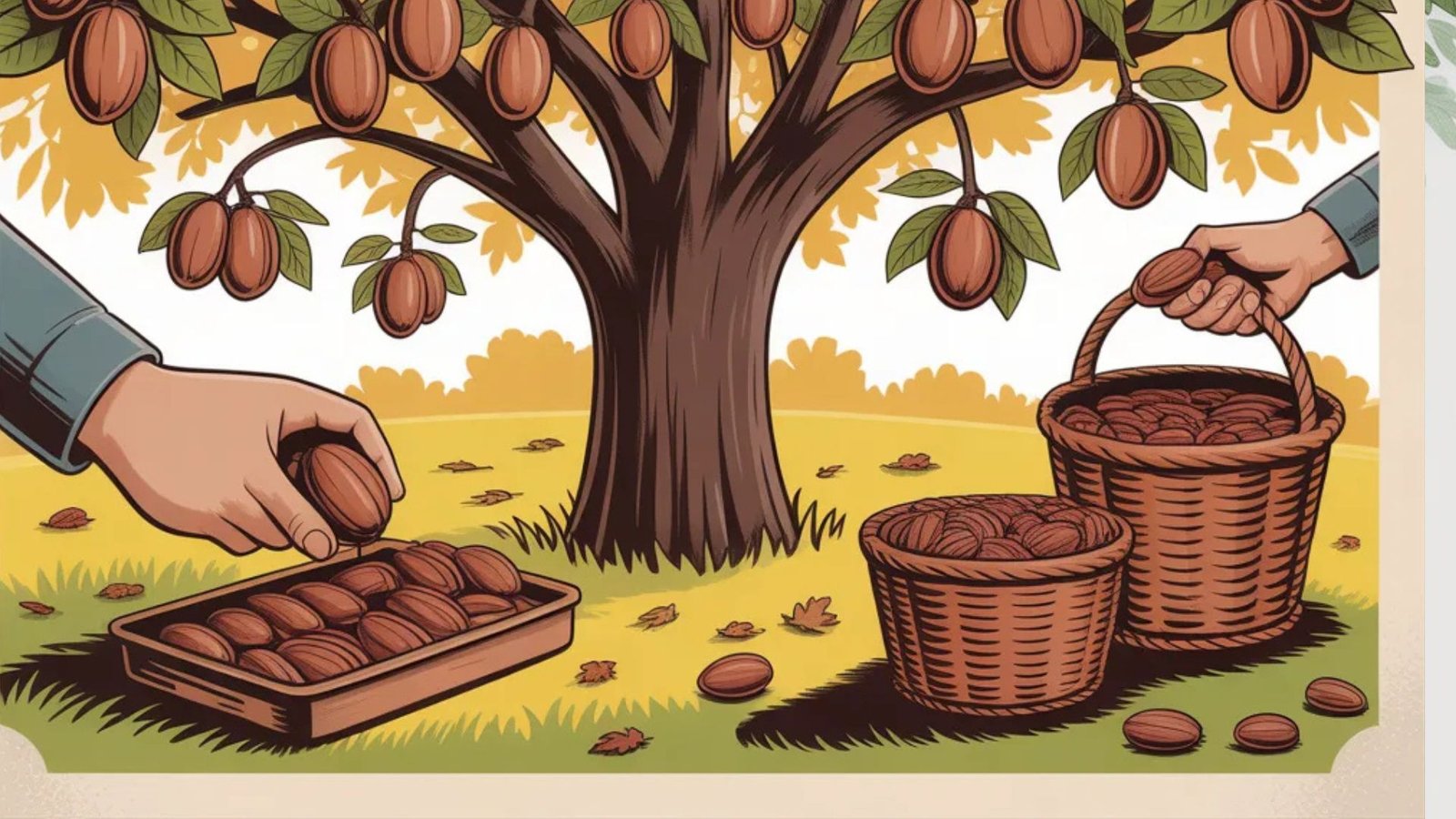
Many farmers rely on picking pecans from trees using gentle force. Some use shaking branches or knocking nuts with a pole to encourage ripe nuts to fall. Others prefer collecting pecans from the ground after natural drop to protect the shells.
Each method affects quality and efficiency. Manual picking protects shells but requires time. Mechanical tools speed up harvesting and support large-scale pecan nut farming. Choosing the right method helps farmers balance labor, cost, and nut quality.
Pecan Harvesting Essentials
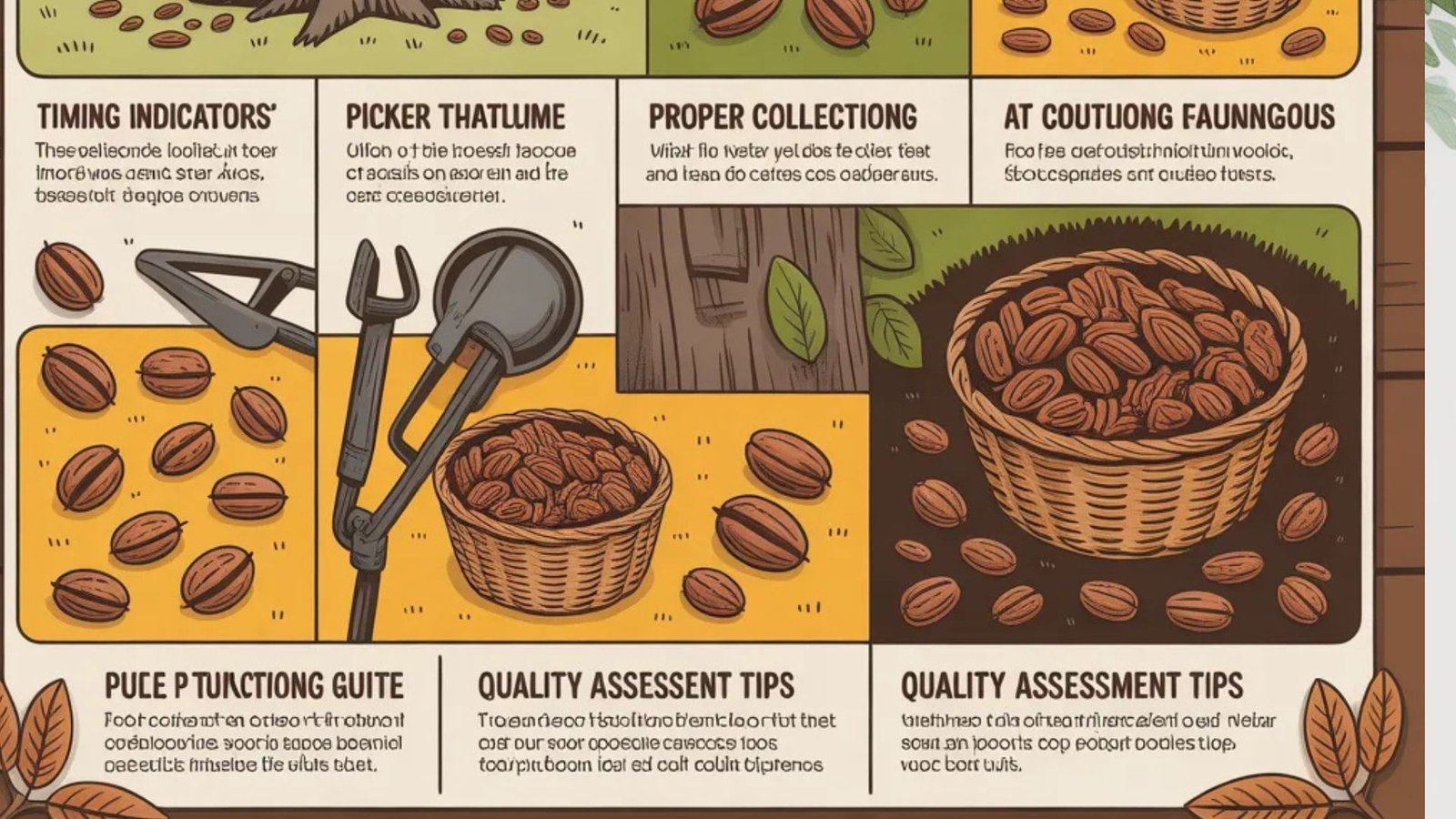
Every successful harvest depends on preparation and precision. Farmers focus on protecting nuts from pest and bird damage and avoiding mold growth caused by moisture. Quick collection prevents losses and preserves freshness.
After harvesting, farmers begin pecan nut processing immediately. Early handling improves flavor and texture. A smooth transition from field to processing stage ensures that nuts remain clean, intact, and valuable in the pecan nut market.
The Pecan Drying Process
Drying pecans is essential for long-term quality. During the pecan drying process, farmers reduce moisture content to prevent spoilage. Proper air circulation helps nuts dry evenly and maintain natural flavor.
The length of drying time varies depending on climate and nut size. When dried correctly, pecans develop a brittle kernel and richer taste. This stage also prepares nuts for curing pecans, which further improves aroma and texture.
| Drying Method | Result |
| Natural air drying | Balanced flavor |
| Controlled drying | Longer shelf life |
Processing Pecans After Harvest
After drying, nuts undergo pecan nut shelling to separate shells from kernels. This step reveals the delicate pecan nut kernels, which must remain intact for premium value. Careful handling protects taste and appearance.
Modern farms follow strict pecan curing process standards to enhance flavor. High-quality processing supports strong branding and helps farmers compete in domestic and international markets. Efficient processing also strengthens opportunities in pecan nut export.
Proper Storage of Pecans
Correct pecan nut storage protects nuts from heat, moisture, and insects. Farmers and consumers use cool conditions to support long-term storage and maintain freshness. Proper storage also prevents the formation of rancid nuts.
Many experts recommend refrigeration and freezing to preserve quality for months or years. These methods improve shelf life preservation and protect nutritional value. When stored properly, pecans remain flavorful and market-ready.
| Storage Method | Shelf Life |
| Room temperature | Several months |
| Refrigeration | One year or more |
| Freezing | Two years or longer |
Quality Improvement in Pecan Harvest
Quality improvement begins with timing, handling, and processing. Farmers who master harvesting techniques produce superior nuts with better taste and texture. Strong quality control also increases market value and customer trust.
Innovative methods in pecan nut production help farmers adapt to climate change and market demand. Advanced technology and sustainable practices allow farms to increase yield while protecting the environment. These improvements strengthen the future of the pecan industry.
“The secret of great pecans is not speed, but timing and care.” — American Orchard Expert
Conclusion
Understanding how to pick pecans transforms harvesting into a precise and rewarding process. Every stage, from growth to storage, shapes flavor and value. Farmers who respect timing and technique create outstanding results in every harvest.
When you master how to pick pecans, you connect with nature and tradition. The journey from tree to table reflects patience, skill, and passion. This is why pecans remain one of America’s most treasured nuts and a symbol of quality agriculture.
FAQs
Q1: What is the best way to pick up pecans?
The best way is to collect pecans from the ground after they naturally fall, or gently shake the tree to loosen ripe nuts.
Q2: How do you tell if a pecan is ripe?
A ripe pecan has a brown shell, and its outer husk splits open, allowing the nut to fall from the tree.
Q3: Can you pick pecans when they’re green?
No, green pecans are unripe and usually do not taste good or develop properly after picking.
Q4: Can you eat pecans right off the tree?
You can eat pecans after removing the husk and shell, but they taste better when dried or cured first.
Q5: What is the best month to pick pecans?
The best time to pick pecans is usually from October to November, depending on the climate and region.