
A rooftop garden design is more than putting some pots on top of your roof. It’s a smart approach to transform an unusable rooftop space into an attractive ecological garden that adds value, decreases temperatures, and also helps local ecosystems. If you live in a bustling city or a quiet suburb, learning how to design rooftop gardens will help you maximize every square inch.
With clever planning with the proper materials and an understanding of urban gardens, everyone can design a beautiful oasis in the sky. This guide will walk you through the steps, challenges, and rewards of gardening on rooftops, including useful container gardening tips for lasting success.
Benefits of Rooftop Gardens
The rooftop garden benefits include cooling buildings and improving air quality. It reduces energy bills and cuts stormwater runoff. A flat roof garden design can also increase property value and curb appeal.
Urban gardening with roof plants helps mental health and community feel. Rooftop garden plants filter pollutants and provide habitat for urban wildlife. It is an eco-friendly garden solution in cities.
Challenges and Considerations
There are challenges of rooftop gardening such as roof load capacity. Understanding rooftop garden weight limits is vital. The roof must support soil, containers, water, and people safely.
Rooftop wind protection and sun exposure on rooftops are also important. High winds and intense sun can stress plants. You must consider rooftop water systems for irrigation and drainage.
Planning Your Rooftop Garden Design
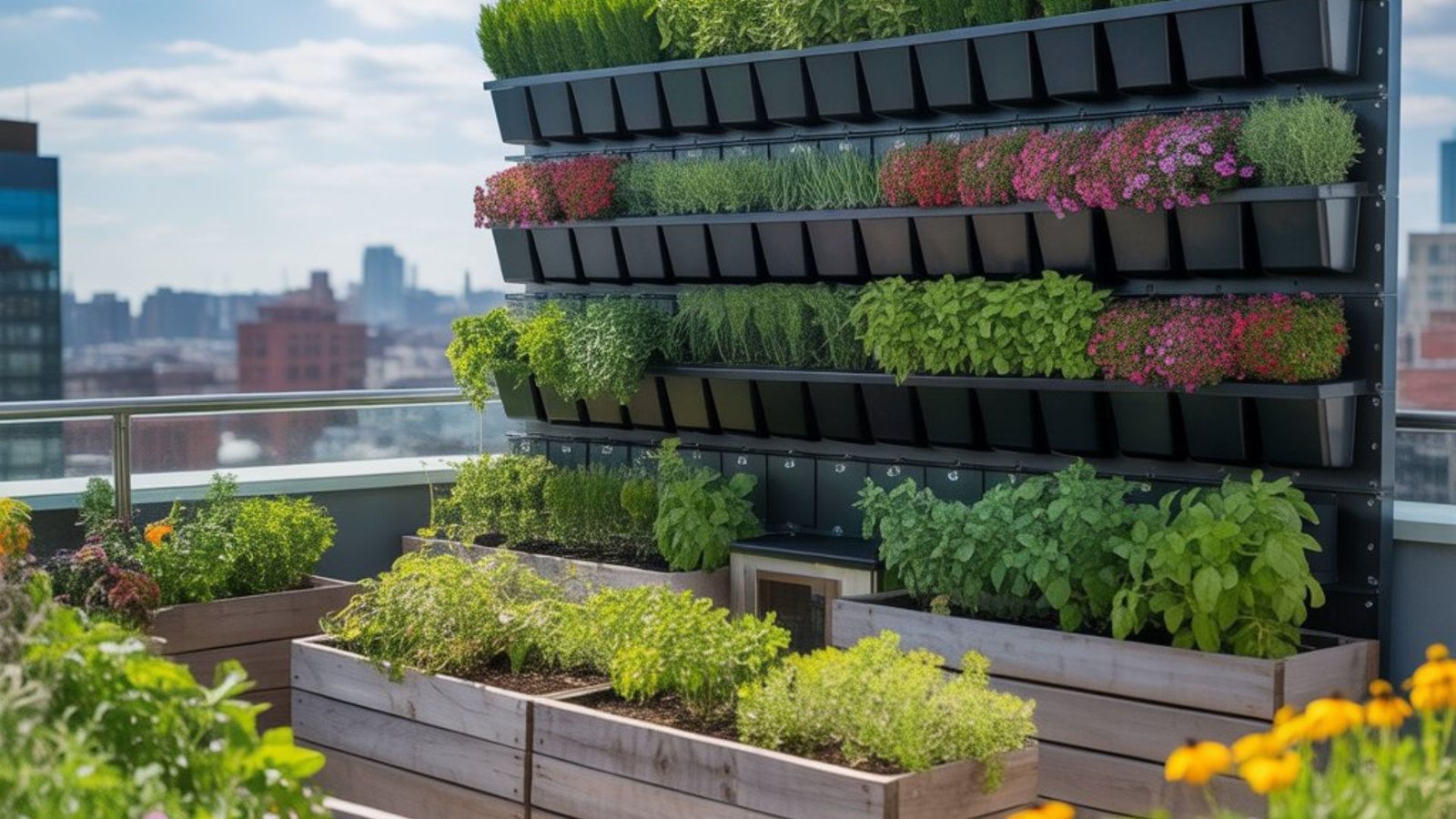
When planning your rooftop garden design, think about layout and use. A combination of vertical garden ideas and seating zones helps maximize space. Plan for pathways, plant beds, and shade areas.
Think about container gardening tips and raised garden beds layout to match your climate. Sun-loving and wind-resistant plants need proper placement. Include table below to visualize planning:
| Zone | Purpose | Ideal Features |
| Seating & Relaxation | Leisure and gatherings | Lightweight planters near bench areas |
| Planting Zone | Vegetables and foliage | Raised garden beds, irrigation access |
| Transition Area | Walkways and plant barriers | Wind-resistant shrubs and light pots |
Structural and Safety Requirements
Working with roof load capacity is critical. A structural engineer must check the roof. You cannot exceed the rooftop garden weight limit or you risk damage. This is basic safety.
You must install guardrails and non-slip surfaces. This helps gardening on rooftops safely. Also consider insurance and liability. Strong wind and water pooling can cause issues. How to design rooftop gardens is very easy method.
Choosing the Right Plants
Select the best plants for rooftop gardens like succulents, sedums, and native perennials. Use drought‑tolerant vegetation and wind‑resistant plants. These can withstand harsh rooftop conditions.
The sun-loving plant thrives in roof locations. Gardeners should choose plants that will thrive on roofs for their sun-exposure tolerance. It is possible to combine vertical gardening ideas with containers. This helps improve the greenery as well as the capacity to harvest quickly.
Step-by-Step Guide to Building a Rooftop Garden
Start by assessing the structural strength of the roof’s structure. Employ a professional to assess the roof capacity to bear loads. Then, plan the rooftop layer of soil prep: waterproof membrane drainage board, filter fabric along with growing media.
The next step is to install roof irrigation systems using greywater or drip systems. Place lightweight planters, raised garden beds, and rooftop containers. Plant sun-loving plants in areas that receive full sunlight and wind-resistant plants close to the edges. Make seating areas, pathways and landscaping elements to improve the landscaping of your rooftop.
Sustainable Practices for Rooftop Gardening
Make use of compost and recycled materials. This will help support eco-friendly gardening practices. Implement rainwater harvesting and drip irrigation to save water. Greywater reuse helps reduce waste. A rooftop garden with sustainable choices becomes a city gardening solution that is green and cost-effective.
Conclusion
Designers who learn how to design rooftop gardens that maximize green space can create stunning urban retreats. By balancing rooftop garden design, load capacity, plant selection, and sustainable water systems, anyone can transform a flat roof into vibrant green space. You can enjoy rooftop garden benefits and turn unused areas into a thriving terrace garden. Start small, plan well, and grow your rooftop oasis with confidence.
FAQs
Q1. How to plan a rooftop garden?
Start by checking your roof’s weight limit, sun exposure, and water access, then design zones for plants, seating, and drainage.
Q2. What are the disadvantages of rooftop gardens?
They can be costly to install, need structural assessments, and require ongoing maintenance and rooftop wind protection.
Q3. How much does it cost to build a rooftop garden?
in the USA It usually ranges from $20-$200 per square feet depending on the material as well as the size and level of.
Q4. Are rooftop gardens a good idea?
Yes, they offer great rooftop garden benefits like cooling, added green space, and improved air quality, especially in cities.
Q5. Do rooftop gardens reduce heat?
Yes, they do help reduce temperatures at the roof and decrease city heat islands with natural insulation.