

Growing your own almonds can feel both exciting and rewarding. Many gardeners wonder how do you grow almond trees successfully at home without professional orchard equipment. The secret lies in understanding the basic almond tree growing conditions that support healthy growth and strong nut production. Almond trees love warm sunshine, well-drained soil, and consistent care throughout the seasons. When you follow a reliable almond tree planting guide, even beginners can establish thriving trees in their backyard garden. Proper attention to almond tree sunlight requirements and watering almond trees properly helps the tree develop strong roots and productive branches. With the right almond tree care tips, your garden can eventually produce delicious homegrown almonds for many years.
Almond Tree Overview and Growing Requirements
Almond trees grow best when you understand their natural habits. They typically reach 10 to 25 feet tall and prefer warm sunny environments. Understanding almond tree growing conditions helps gardeners maintain healthy trees. Most varieties thrive within USDA hardiness zones 7-9, where winters remain mild and summers stay warm.
Many gardeners are surprised to learn almonds need winter chill. Trees require a chilling hours requirement below 45°F during winter dormancy. These cold hours help the tree reset before spring flowering begins. Without this seasonal cooling period, nut production often decreases dramatically.
Best Climate and Soil Conditions for Almond Trees
Climate plays the most critical role when you learn how to grow almond trees in your garden for healthy nut production. Almond trees thrive in regions with hot summers and mild winters. The best temperature for almond trees usually falls between 75°F and 95°F during the growing season.
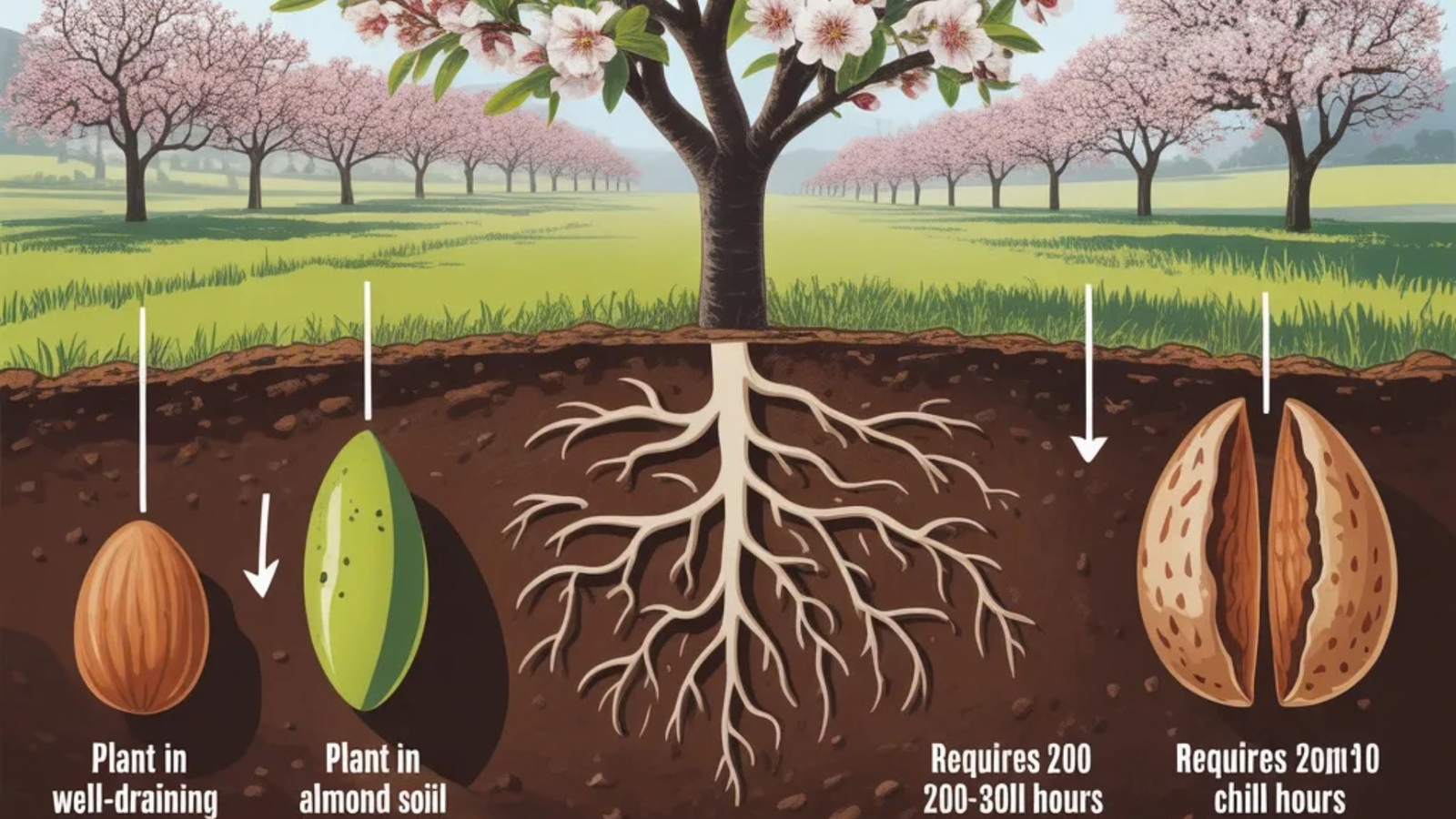
Healthy trees also depend on excellent soil. The ideal soil for almond trees is loamy well-drained soil that allows roots to breathe freely. Heavy clay traps water and damages the taproot system of almond trees. Gardeners who improve soil drainage often see stronger growth and larger nut harvests.
| Factor | Ideal Condition |
|---|---|
| Soil Type | loamy well-drained soil |
| Temperature | 75°F – 95°F |
| Climate Zone | USDA hardiness zones 7-9 |
| Winter Chill | 300+ cold hours |
Choosing the Best Almond Tree Varieties
Garden success often begins with choosing the right tree. Many growers prefer sweet almond tree varieties because they produce edible nuts safely. Commercial orchards rely heavily on selections developed for California almond production, where climate conditions match almond needs perfectly.
Home gardeners also benefit from modern breeding. Several self-fertile almond trees allow gardeners to grow a single tree without pollination partners. Experts recommend planting late-blooming almond cultivars because they avoid frost damage during spring flowering.
| Variety | Special Feature |
|---|---|
| All-In-One | Self-fertile tree |
| Garden Prince | Compact garden size |
| Titan | Cold tolerant |
| Nikita’s Pride | Heavy producer |
How to Plant Almond Trees Step by Step
Planting correctly ensures your almond tree thrives for decades. A careful almond tree planting guide starts by digging a wide hole. This hole must accommodate the natural taproot system of almond trees without bending or cutting the root.
The correct almond tree spacing and planting depth also matter greatly. Trees need at least 15 to 20 feet of space. Many commercial orchards depend on grafted almond rootstock because grafting improves disease resistance and nut production reliability.
| Planting Step | Purpose |
|---|---|
| Prepare deep planting hole | Protect roots |
| Place root flare above soil | Prevent rot |
| Water deeply after planting | Establish roots |
Selecting the Perfect Planting Location
Location determines whether almond trees thrive or struggle. Almonds demand strong sunlight to develop healthy flowers. Meeting almond tree sunlight requirements ensures strong photosynthesis and better nut production throughout the season.
When gardeners follow an almond tree planting guide, they choose open locations with good airflow. Avoid frost pockets and shady corners. A warm slope or sunny backyard works perfectly when learning how to grow almond trees in your garden for healthy nut production.
Essential Almond Tree Care Guide
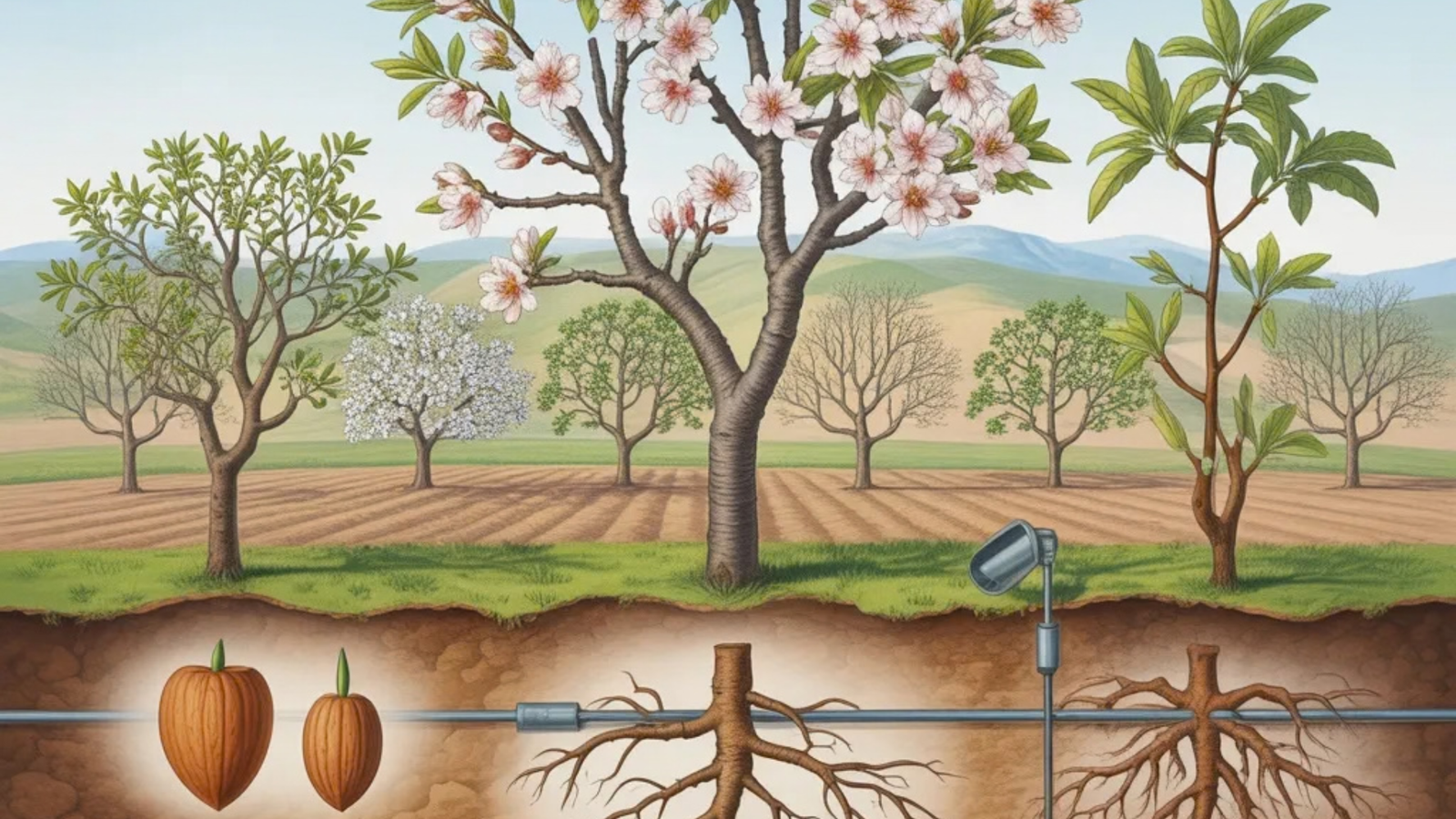
Consistent care keeps almond trees productive for decades. Proper watering forms the backbone of successful almond orchard management. Gardeners who focus on watering almond trees properly notice larger nuts and stronger tree growth.
Nutrition also matters. Experts recommend fertilizing almond trees using a balanced spring fertilizer each growing season. These simple almond tree care tips help trees maintain strong branches and develop healthy fruit clusters every year.
| Care Task | Frequency |
|---|---|
| Deep watering | Weekly in summer |
| Fertilization | Spring |
| Soil mulch | Annually |
Pollination and Flowering in Almond Trees
Flowering season marks a magical moment for gardeners. Almond blossoms appear early in spring and attract bees. Most varieties require almond tree pollination through bees because of strict cross-pollination requirements.
Some modern self-fertile almond trees solve this challenge. These varieties produce nuts without a partner tree. However, planting two compatible cultivars often increases yields when learning how to grow almond trees at home successfully.
Pruning and Training Almond Trees for Healthy Growth
Healthy structure ensures long-term productivity. Gardeners often improve harvests by carefully pruning almond trees every winter. Removing crowded branches allows sunlight to reach inner limbs and developing fruit.
Proper pruning also prevents disease spread. Branch thinning improves airflow which reduces fungal diseases in almond trees. Experienced orchard managers consider pruning a core practice within successful almond orchard management.
Harvesting, Drying, and Storing Almonds
Harvest season arrives when the green almond hull begins splitting open. This moment signals the perfect time for harvesting almonds from trees. Farmers often shake branches gently so the nuts fall onto waiting tarps.
After harvesting, almonds require careful drying. The almond shell drying process protects nuts from mold. Once dried properly, almonds store well for months while maintaining flavor and nutrition.
| Harvest Stage | Description |
|---|---|
| Hull split | Nuts ready to harvest |
| Drying stage | Prevent mold growth |
| Storage | Cool dry location |
Common Almond Tree Problems and How to Fix Them
Even healthy trees face occasional threats. Several insects attack almond crops including the navel orange worm pest. Gardeners also monitor damage from aphids and scale insects, which feed on leaves and stems.
Disease management remains equally important. Many orchards struggle with anthracnose leaf infection and other fungal diseases in almond trees. Proper pruning, sanitation, and seasonal monitoring help prevent these almond tree pests and diseases from destroying harvests.
| Problem | Solution |
|---|---|
| navel orange worm pest | Remove leftover nuts |
| aphids and scale insects | Spray water or natural oils |
| anthracnose leaf infection | Apply fungicide |
Final Thoughts
Learning how to grow almond trees in your garden for healthy nut production takes patience and observation. With the right almond tree climate requirements, good soil preparation, and consistent care, a single tree can produce nuts for decades. Many gardeners find that growing almonds at home brings both beauty and delicious rewards to their landscape.