
Chestnuts are a delicious seasonal nut that many people enjoy during fall and winter. If you’ve ever bought fresh chestnuts, you may wonder how to prepare chestnuts the right way at home. Proper preparation makes them softer, sweeter, and easier to cook in many recipes. Most beginners struggle with how to peel chestnuts easily, because the shell and thin inner skin can be tough. Fortunately, a few simple steps like soaking chestnuts before cooking and boiling chestnuts for peeling make the process much easier. Once you understand preparing chestnuts for cooking, you can use them in stuffing, soups, desserts, and many comforting holiday dishes loved across the United States. Check our easy guide for Propagating Chestnut Trees from Seed.
What Are Chestnuts and Why Are They Popular?
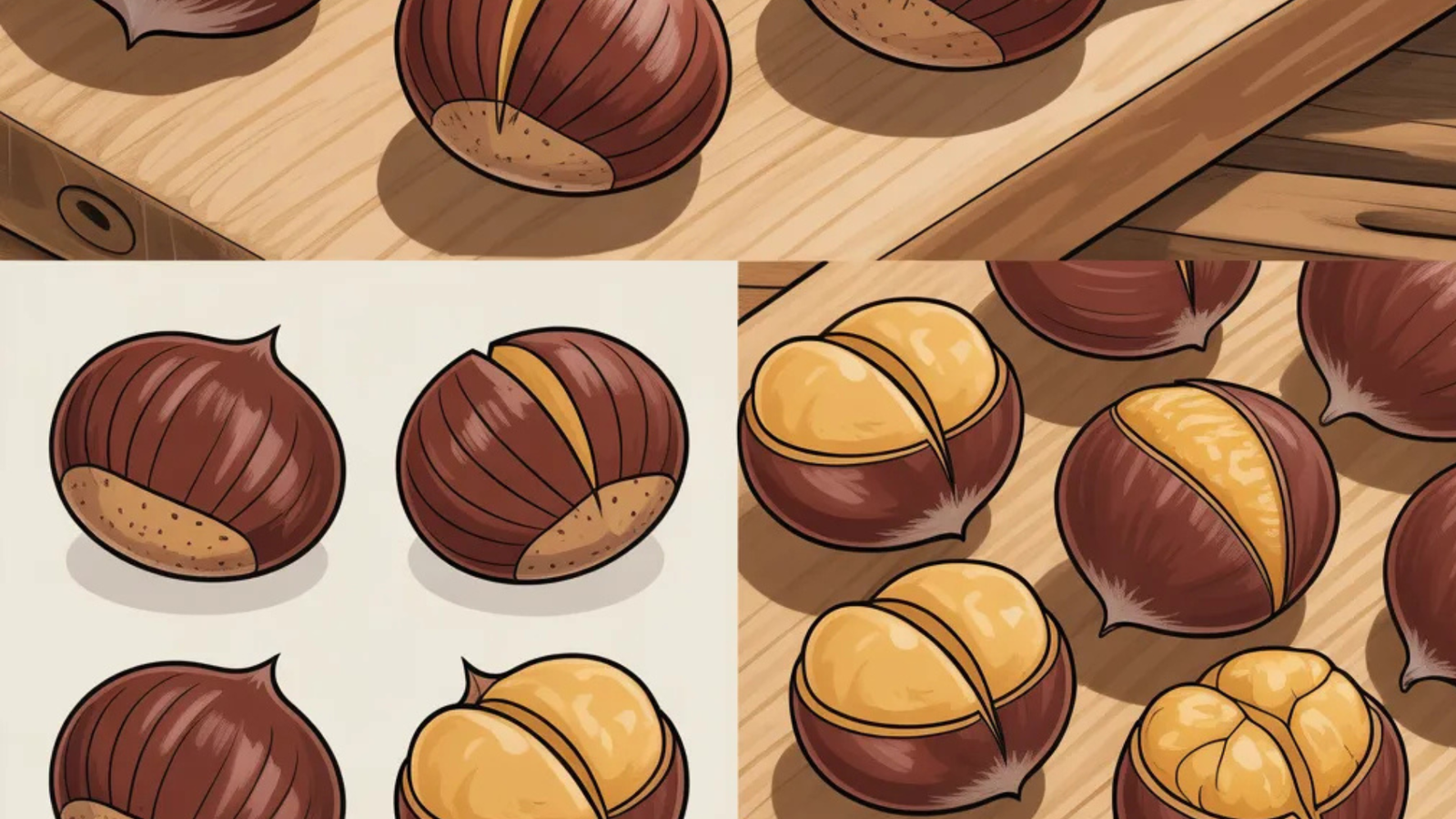
Chestnuts are edible nuts that grow inside spiny burrs on chestnut trees. Unlike many other nuts, they contain more carbohydrates and less fat. Because of this, they have a soft texture and mild sweetness. People searching how to prepare chestnuts usually start with selecting good quality fresh chestnuts that feel heavy and firm.
These nuts become popular during colder months because they taste best when warm. Many cooks use them while preparing chestnuts for stuffing, baking sweets, or making chestnuts for soups and desserts. The warm, slightly sweet flavor makes them perfect for holiday chestnut recipes, especially when served as roasted chestnuts.
Chestnuts Around the World
Chestnuts are enjoyed in many countries, and every region cooks them differently. In Europe, street vendors sell hot roasted chestnuts during winter festivals. In Asia, cooks often use chestnuts in rice and soup dishes.
Many traditional recipes include chestnuts for sticky rice or sweet desserts made with chestnut puree. In China, a well-known dish called braised chicken with chestnuts combines savory meat with the sweet taste of chestnuts. These examples show how learning how to cook fresh chestnuts opens the door to many global recipes.
Why You Need to Prepare and Peel Chestnuts
Raw chestnuts have tough chestnut shells and a thin papery brown inner skin inside. If you try to eat them raw, they taste hard and unpleasant. That is why preparing chestnuts for cooking always begins with softening the shell through soaking or heating.
Once the shell softens, it becomes easier to start removing chestnut shell and skin. Many beginners ask about the easy chestnut peeling method because the skin sticks tightly to the nut. Proper heating helps loosen this skin, making how to peel chestnuts easily much simpler.
The Key: Don’t Overcook Them
Many people ruin chestnuts because they cook them too long. When you are boiling chestnuts for peeling, the goal is not to fully cook them. The goal is to soften the shell so peeling becomes easier.
If chestnuts stay too long in boiling water, they become soft and crumbly. The nut loses its shape and becomes difficult to handle. Therefore, the best way to peel chestnuts is to boil them briefly and peel them while they are still warm.
Ingredients and Tools Needed to Prepare Chestnuts
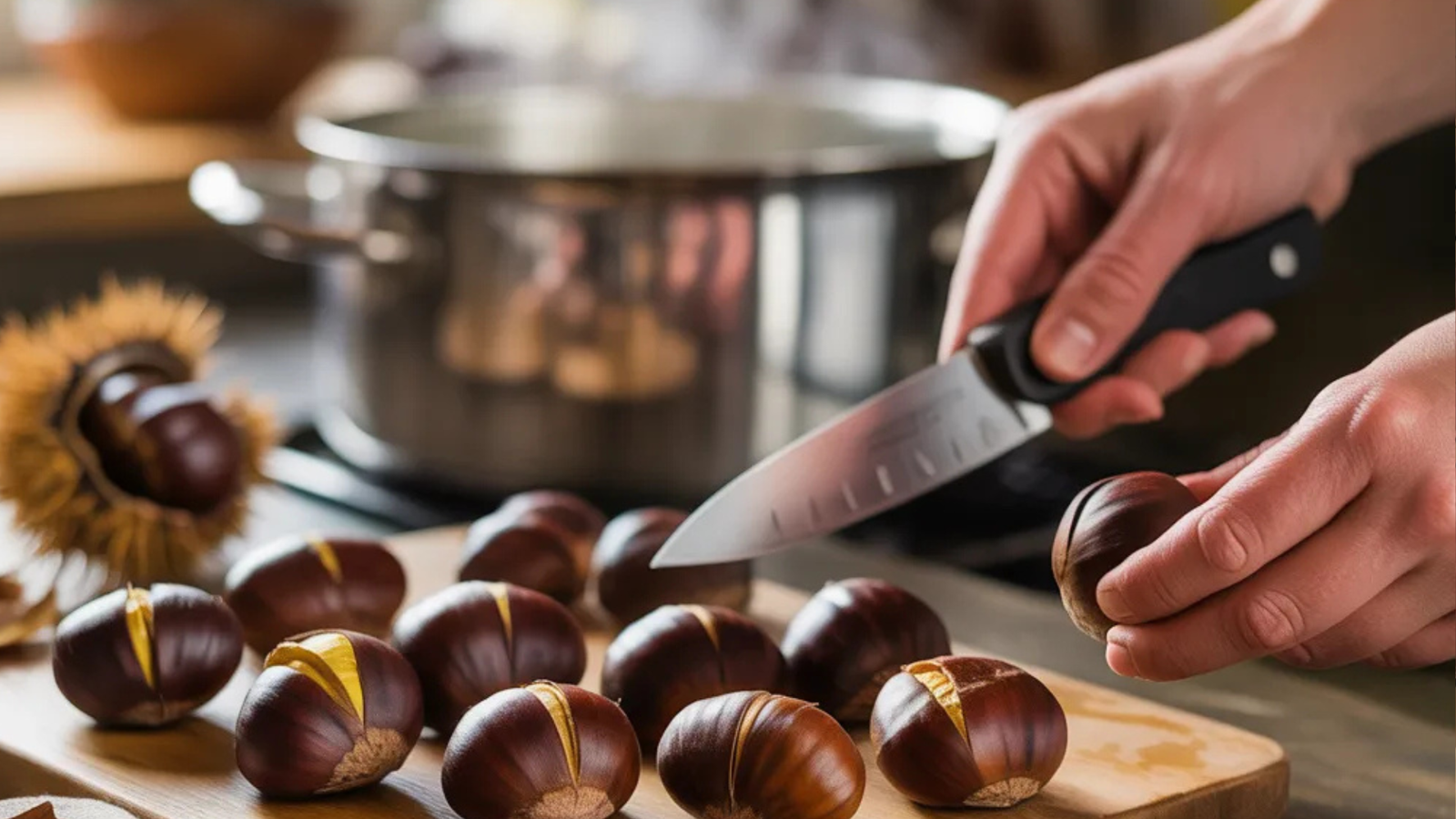
Preparing chestnuts does not require complicated equipment. However, using the right tools makes the process faster and safer. Many cooks prefer using a chestnut knife because its curved blade cuts shells easily.
Some people use a paring knife or even kitchen shears to cut the shell. A simple kitchen towel also helps hold hot chestnuts while peeling them. The table below shows common tools used when learning how to prepare chestnuts.
| Tool | Purpose |
|---|---|
| chestnut knife | Safely score the shell |
| paring knife | Alternative cutting tool |
| kitchen shears | Trim the shell edges |
| kitchen towel | Protect hands during peeling |
| Pot with boiling water | Softens shells |
How to Prepare Chestnuts Step by Step
The easiest way to start preparing chestnuts for cooking involves soaking, cutting, and boiling. This method softens the shell and allows you to follow an easy chestnut peeling method without frustration.
Following the right steps ensures the shell opens properly. This prevents the nut from breaking during peeling and improves results when cooking chestnuts for recipes.
Step 1: Soaking the Chestnuts
The first step in how to prepare chestnuts is soaking chestnuts before cooking. Place the nuts in a bowl of water for about thirty to sixty minutes. This softens the outer layer and makes cutting easier.
Soaking also helps remove dirt from fresh chestnuts. Some shells begin to loosen slightly during soaking, which later helps in removing chestnut shell and skin.
Step 2: Scoring the Shell
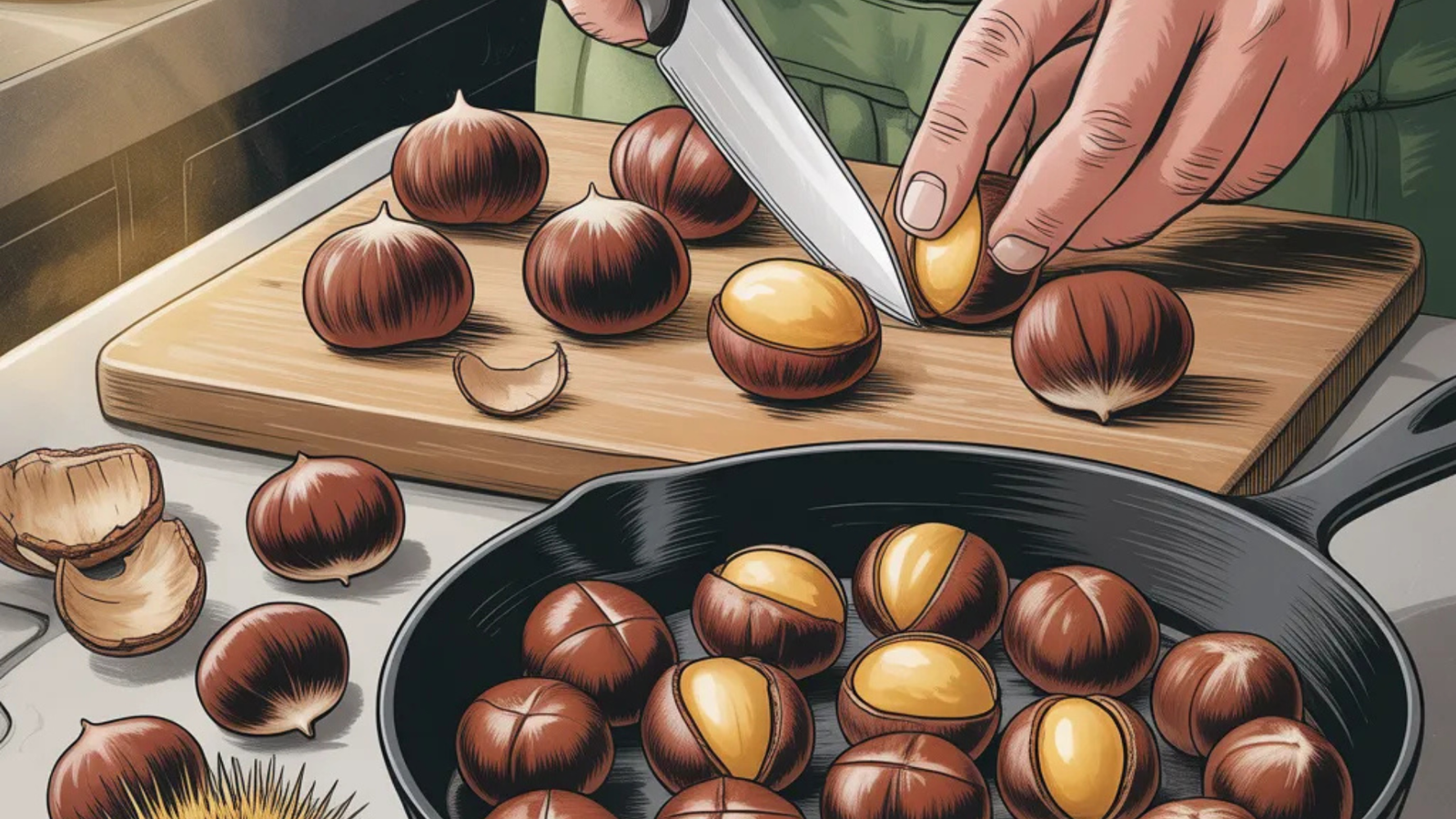
After soaking, make a small “X” cut across each nut. This step is known as scoring chestnuts before roasting or boiling. The cut allows heat to reach the inside of the nut.
Without this step, the shell may burst during cooking. Properly cut scored chestnuts open slightly while heating, which makes how to peel chestnuts easily possible.
Step 3: Boiling Briefly
Next place the scored chestnuts in a pot of boiling water. Leave them for three to five minutes. This is the key stage in boiling chestnuts for peeling.
Short boiling softens the shell but keeps the nut firm. Once removed from the water, the chestnuts are ready for the best way to peel chestnuts.
How to Peel Chestnuts Easily
When chestnuts come out of the pot, peel them immediately. Use a kitchen towel to hold the hot nut safely. Begin removing chestnut shell and skin while the chestnut is warm.
Inside the shell lies the thin papery brown inner skin. Pull both layers away together. Following this easy chestnut peeling method results in smooth peeled chestnuts ready for cooking.
Best Time to Peel Chestnuts
Timing is very important when learning how to peel chestnuts easily. Chestnuts peel best when they are warm. Once they cool down, the skin sticks tightly again.
To prevent this problem, keep the remaining scored chestnuts inside the hot pot while peeling small batches. This simple trick is one of the best chestnut peeling tips used by professional cooks.
Cooking Methods for Chestnut
Once the nuts are peeled, they are ready for cooking. Many recipes explain how to cook fresh chestnuts using roasting, boiling, or baking methods.
Cooks often prepare them for savory dishes, sweet desserts, and rice meals. Because of their mild sweetness, they work well in both sweet and savory recipes.
Roasted Chestnuts
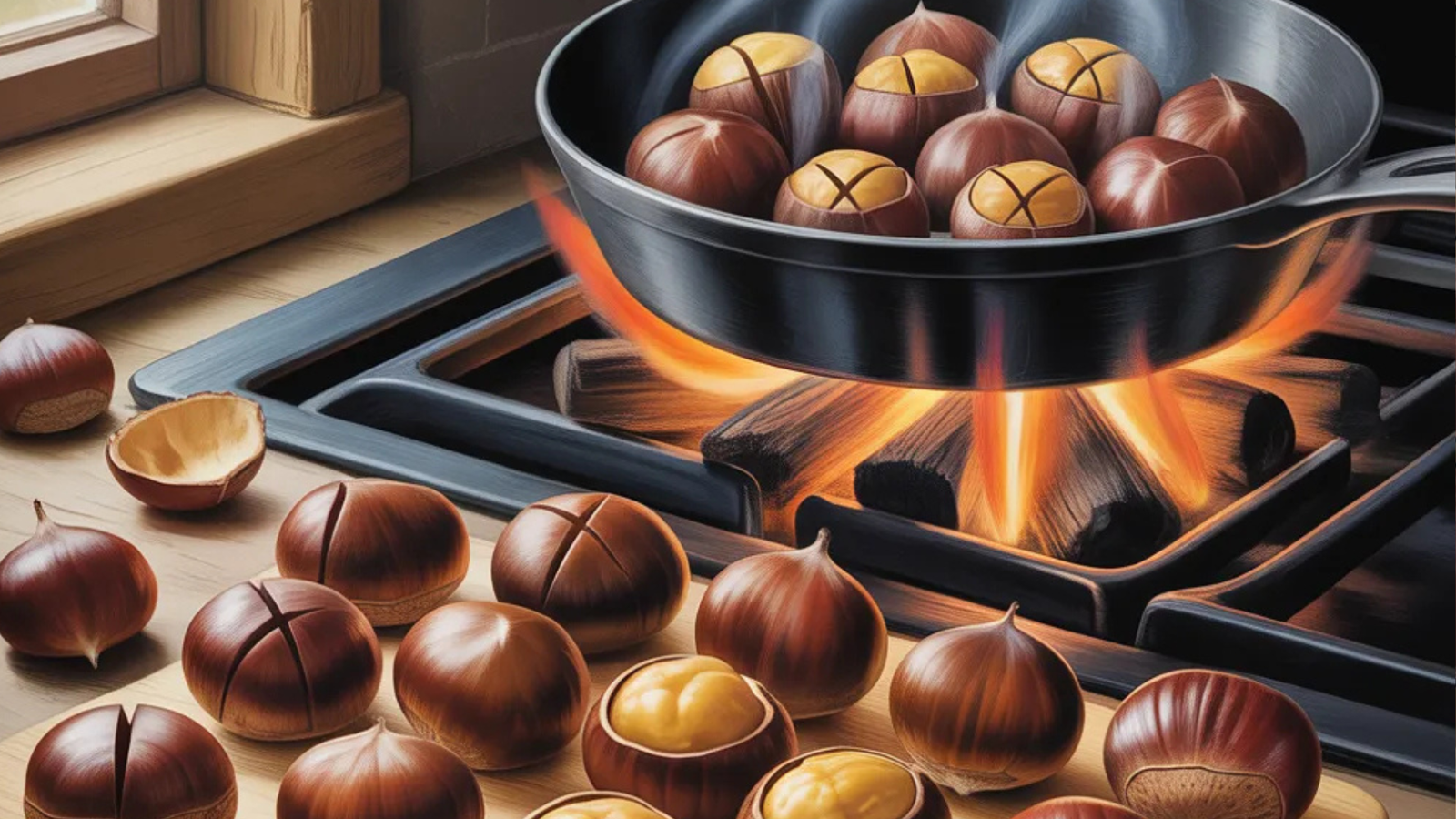
Roasting is the most famous way to enjoy chestnuts. Simply place scored chestnuts in the oven until the shell opens and the nut becomes tender.
Warm roasted chestnuts taste sweet and nutty. They are often eaten during winter holidays and appear in many traditional holiday chestnut recipes.
Chestnuts in Soups and Rice
Many chefs enjoy cooking chestnuts for recipes that include rice and soup. Soft peeled chestnuts add texture and sweetness to dishes.
You will often find chestnuts in winter soups, rich stews, and Asian sticky rice dishes. Their flavor also pairs well with vegetables and meats.
How to Store Chestnuts for Later Use
Fresh chestnuts do not last as long as other nuts. If you buy a large quantity, proper storage becomes important. One method involves freezing peeled chestnuts after preparing them.
Place the nuts inside a zip-lock freezer bag and keep them in freezer storage. This method creates long-lasting frozen chestnuts that can stay fresh for months. Learning how to store chestnuts in freezer helps prevent waste.
| Storage Method | Duration |
|---|---|
| Refrigerator | 1–2 weeks |
| freezer storage | Up to 12 months |
These chestnut storage methods allow you to keep nuts ready for future cooking.
Common Mistakes When Preparing Chestnuts
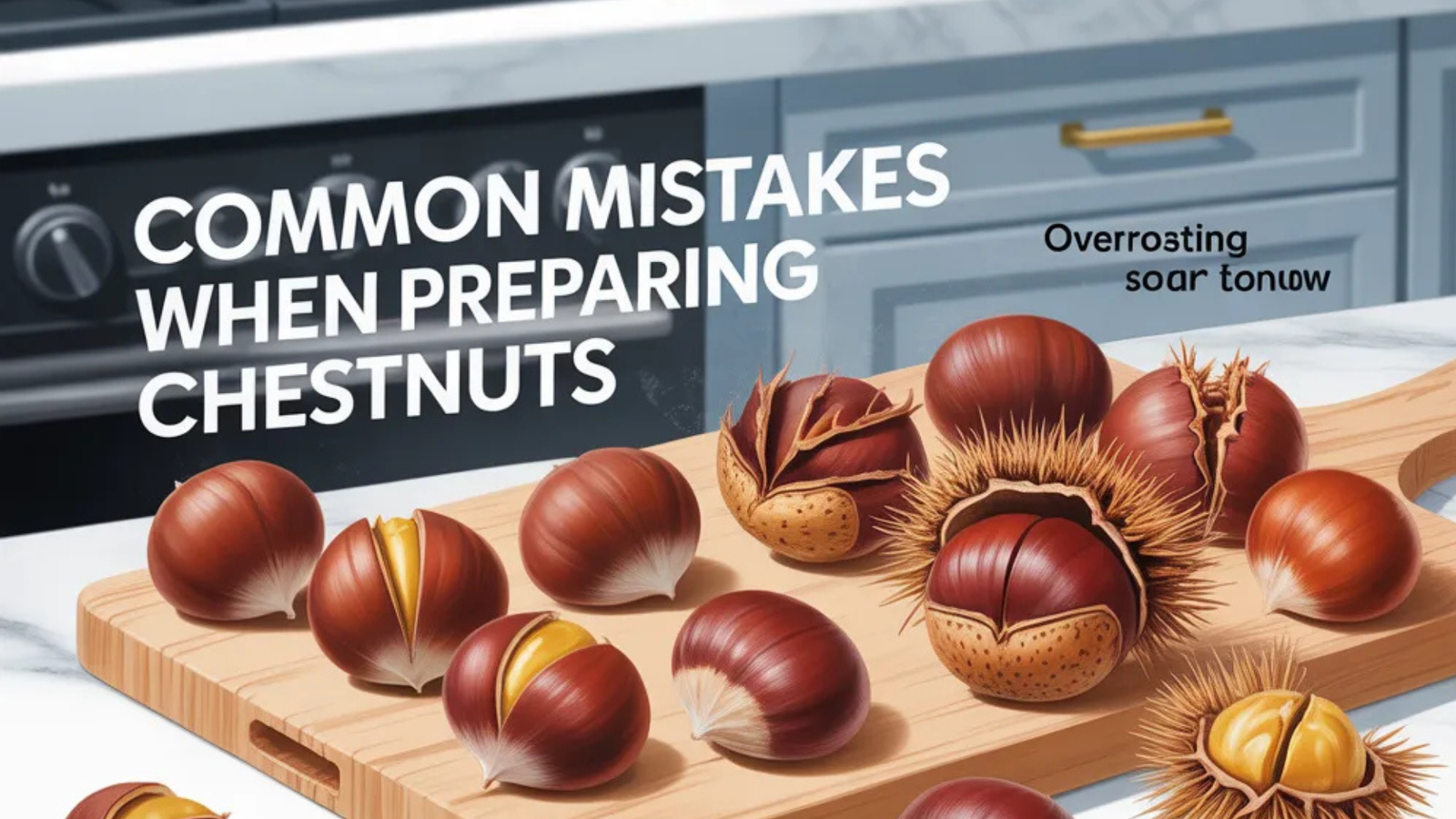
Many beginners struggle when learning how to prepare chestnuts because they skip important steps. One common mistake is forgetting scoring chestnuts before roasting or boiling.
Another problem happens when people wait too long before peeling. If chestnuts cool completely, removing chestnut shell and skin becomes difficult. Following simple chestnut peeling tips prevents these problems.
How to Eat and Use Prepared Chestnuts
Once you finish preparing chestnuts for cooking, they can be used in many recipes. Soft peeled chestnuts taste delicious when added to stuffing or soups.
Many chefs enjoy preparing chestnuts for stuffing during holidays. Others turn them into sweet chestnut desserts or creamy chestnut puree used in pastries and cakes.
Conclusion
Learning how to prepare chestnuts is easier than many people expect. The key steps include soaking chestnuts before cooking, boiling chestnuts for peeling, and peeling them while warm.
Once prepared, chestnuts become a wonderful ingredient in many dishes. From soups to desserts, properly prepared chestnuts bring warmth, sweetness, and tradition to your kitchen.
FAQs
Q1: What do you do with Chinese chestnuts?
You can roast, boil, or steam Chinese chestnuts and use them in soups, desserts, or stir-fries for a sweet, nutty flavor. They are also great in stuffing or pureed for sauces.
Q2: Do you have to soak chestnuts before you cook them?
Soaking chestnuts before cooking softens the chestnut shells and makes peeling much easier, especially for fresh or large chestnuts.
Q3: Is chestnut good for diabetes type 2?
Chestnuts are low in fat and have complex carbohydrates, which can help stabilize blood sugar for type 2 diabetics. Moderation is key.
Q4: What is the difference between chestnut and Chinese chestnut?
Chinese chestnuts are sweeter, smaller, and have thinner shells compared to regular European or American chestnuts, which are larger and starchier.
Q5: please give me 2 lines answer?
Yes, Chinese chestnuts are nutritious and low in fat, providing fiber, vitamin C, and minerals that support heart and digestive health. They make a healthy snack or addition to soups and desserts.