
Storing seeds the right way can make all the difference between a thriving garden and one that struggles to sprout. If you’ve ever wondered how to store seeds so they stay fresh and ready for planting next season, the answer lies in creating the perfect environment. Seeds are living organisms that need protection from heat, moisture, and light to stay healthy.
Proper **seed storage temperature**, **airtight containers for seeds**, and keeping them in a **cool, dry, and dark** places help maintain their germination power. Whether you’re saving flower seeds or vegetables, learning **how to keep seeds viable for years** ensures a productive garden season after season.
Why Proper Seed Storage Is Important
Seeds are living embryos in a dormant state. Over time, they lose their ability to germinate—a process called **seed viability over time**. When exposed to heat, light, or humidity, seeds begin to age faster and may not sprout at all. That’s why **proper seed storage conditions** are essential for maintaining their health.
Every seed has a lifespan, but with **moisture control for seed storage** and stable temperatures, you can slow down this natural aging. A well-preserved seed can last from one to five years, depending on the crop. For example, tomato and cucumber seeds stay viable longer than onions or parsley. By controlling their environment, you can **extend seed longevity** naturally and reduce waste.
How to Tell If Your Seeds Are Still Good to Grow
Before planting, you should check if your seeds are still alive. Knowing **how to check if seeds are still good** can save time and effort. Look for changes in color, smell, or shape—these are **signs of bad or moldy seeds**. Seeds that smell musty, appear discolored, or are soft to the touch have likely gone bad.
To test your seeds, perform a **seed viability test** using the **germination test paper towel method**. Dampen a paper towel, spread a few seeds on it, and place it inside a plastic bag. Keep it in a warm area for a week. If more than 70% sprout, your seeds are still good. This simple test tells you whether your stored seeds are worth planting again.
The Golden Rules of Seed Storage: Cool, Dry, and Dark
The most important rule for **storing seeds at home** is to keep them **cool, dry, and dark**. These conditions slow the internal respiration of seeds and prevent premature sprouting. **Temperature and humidity control for seeds** is crucial—too much warmth or moisture will destroy their dormancy.
To understand this better, see the table below:
| Condition | Ideal Range | Reason |
| ————— | ————— | ————————————– |
| **Temperature** | 32–41°F (0–5°C) | Slows aging and prevents sprouting |
| **Humidity** | Below 50% | Reduces mold and mildew risk |
| **Light** | None | Prevents activation of seed metabolism |
Using **airtight containers for seeds** helps maintain these stable conditions. A dark pantry, a low-humidity basement, or even **seed storage in refrigerator** can be ideal spots.
How to Store Seeds for Long-Term Use
For **long-term seed storage**Your main goal is to prevent exposure to air and moisture. Seeds can last many years when kept in **airtight containers for seeds** like glass jars, metal tins, or zip lock bags. You can also use **silica gel packs for seed storage** or uncooked rice inside the jar to absorb extra moisture.
Some gardeners store seeds in the fridge, but not the freezer. **Freezing vs refrigerating seeds** depends on how dry they are. Seeds must reach the **ideal seed moisture content**—around 8%—before freezing, or they might crack. A steady, cool fridge temperature around 40°F works best for **seed storage temperature**.
Drying and Preparing Seeds Before Storage
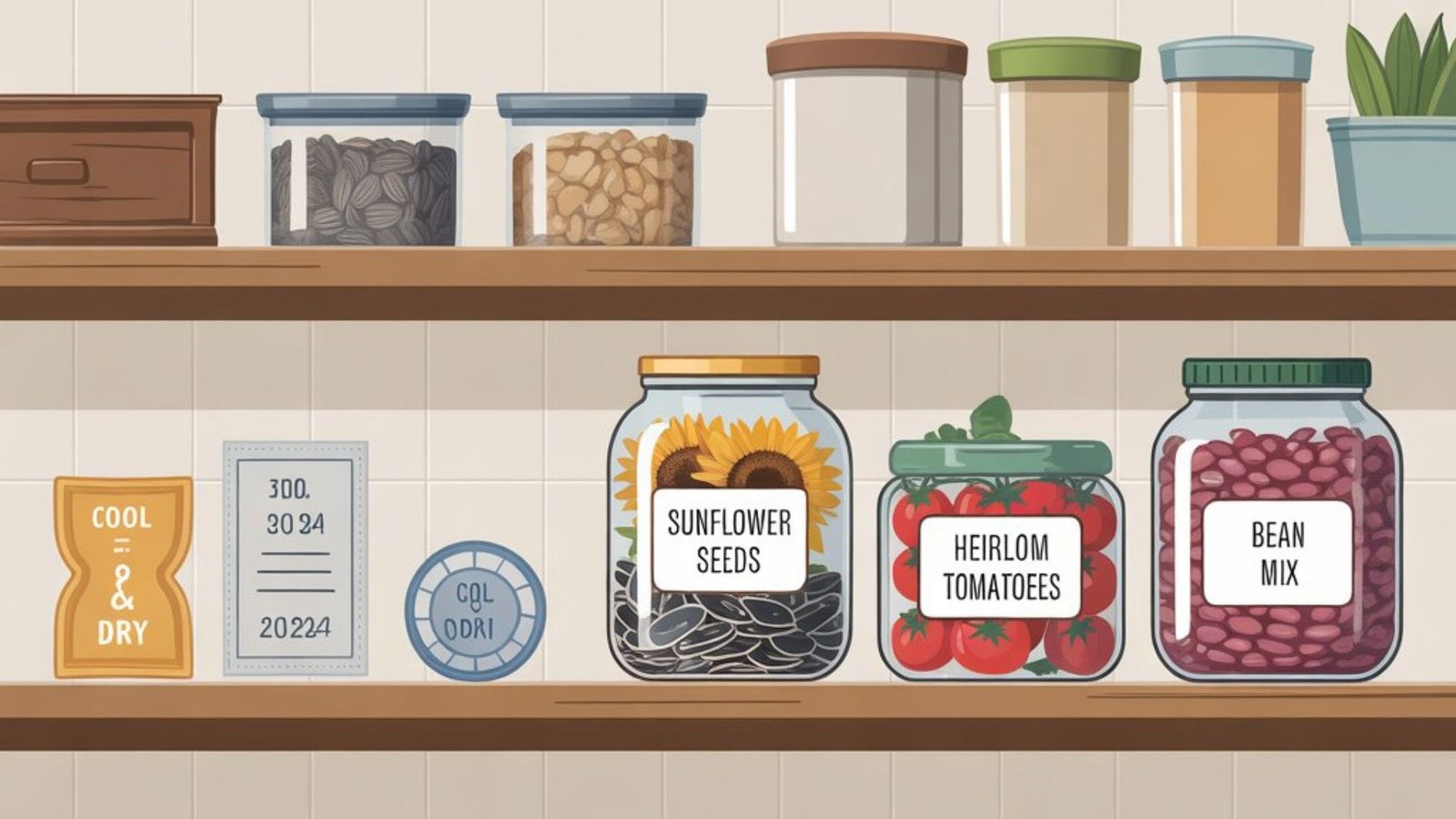
Knowing **how to dry and prepare seeds for storage** is essential. Freshly collected seeds contain natural moisture that can cause rot if sealed too early. Spread them on a paper towel or fine mesh in a shaded, airy area for a week. Avoid drying them under direct sunlight, as that can kill the embryo.
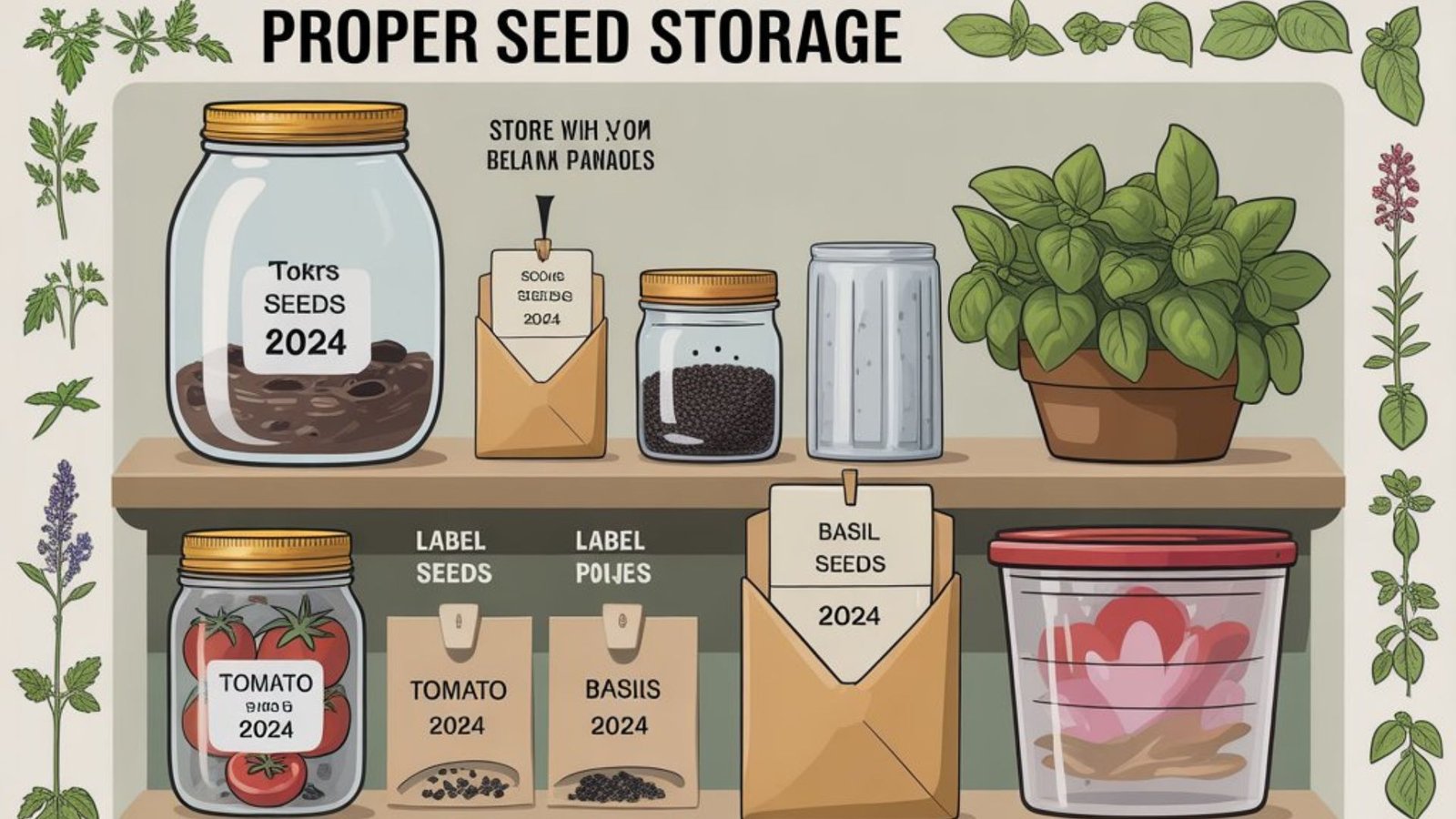
Once dry, store the seeds in labeled envelopes or glass jars. Make sure the seeds are completely dry to prevent **seed rot and mildew**. This drying step ensures your efforts in **how to save seeds for planting** won’t go to waste later.
Organizing Seeds and Labeling for Easy Access
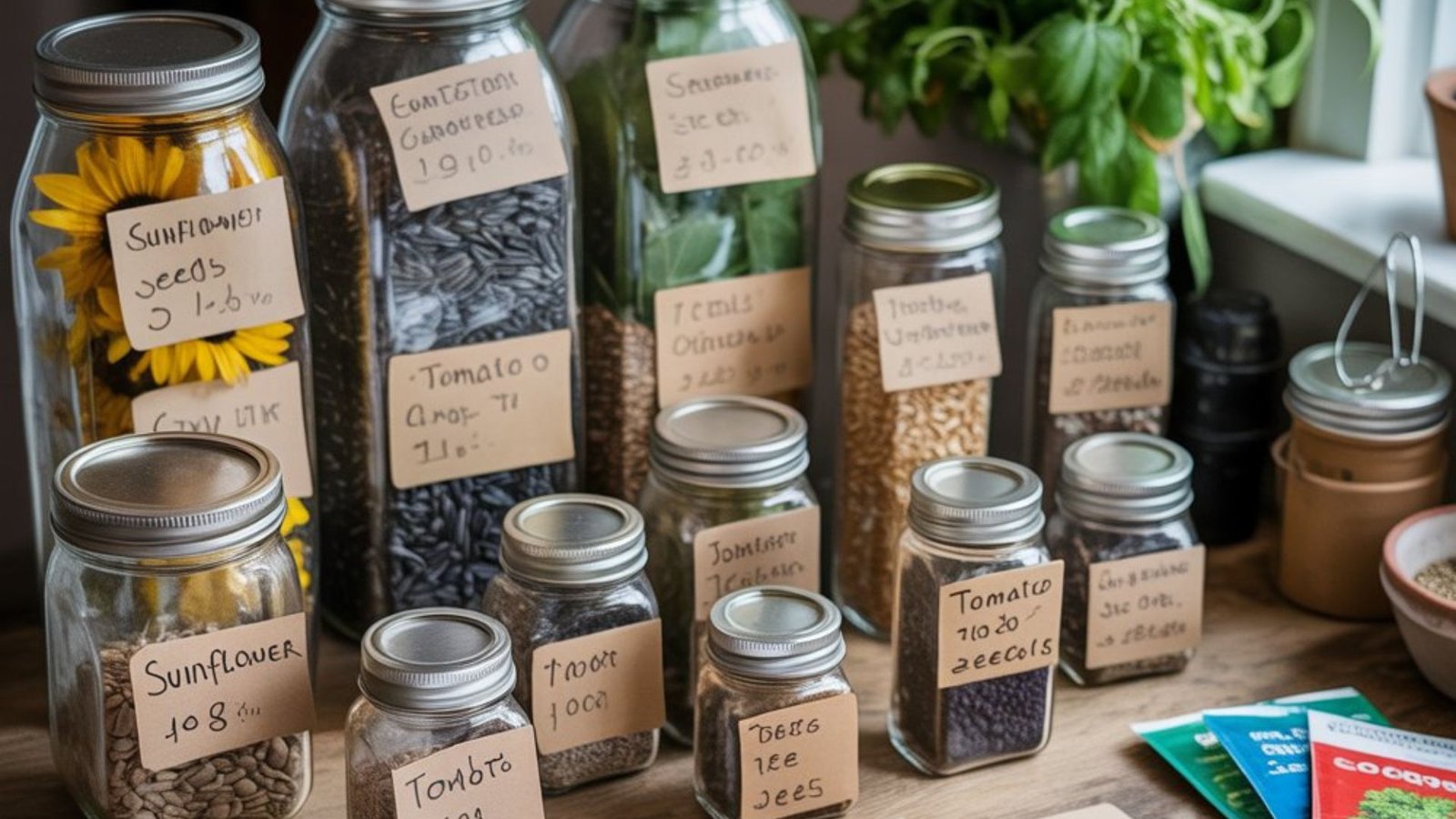
Keeping your seed collection tidy helps you plant efficiently. Start by **organizing seeds by planting season**—spring, summer, or fall. You can also group them by plant type, such as herbs, vegetables, and flowers. This method helps when **storing seeds by crop type** and makes planning easier.
Use **seed envelope labeling tips** to track collection dates, variety names, and expected expiration years. You can store your packets in photo boxes, mason jars, or filing drawers. Simple organization keeps your **home seed bank ideas** accessible and clutter-free.
Shelf Life of Different Seed Varieties
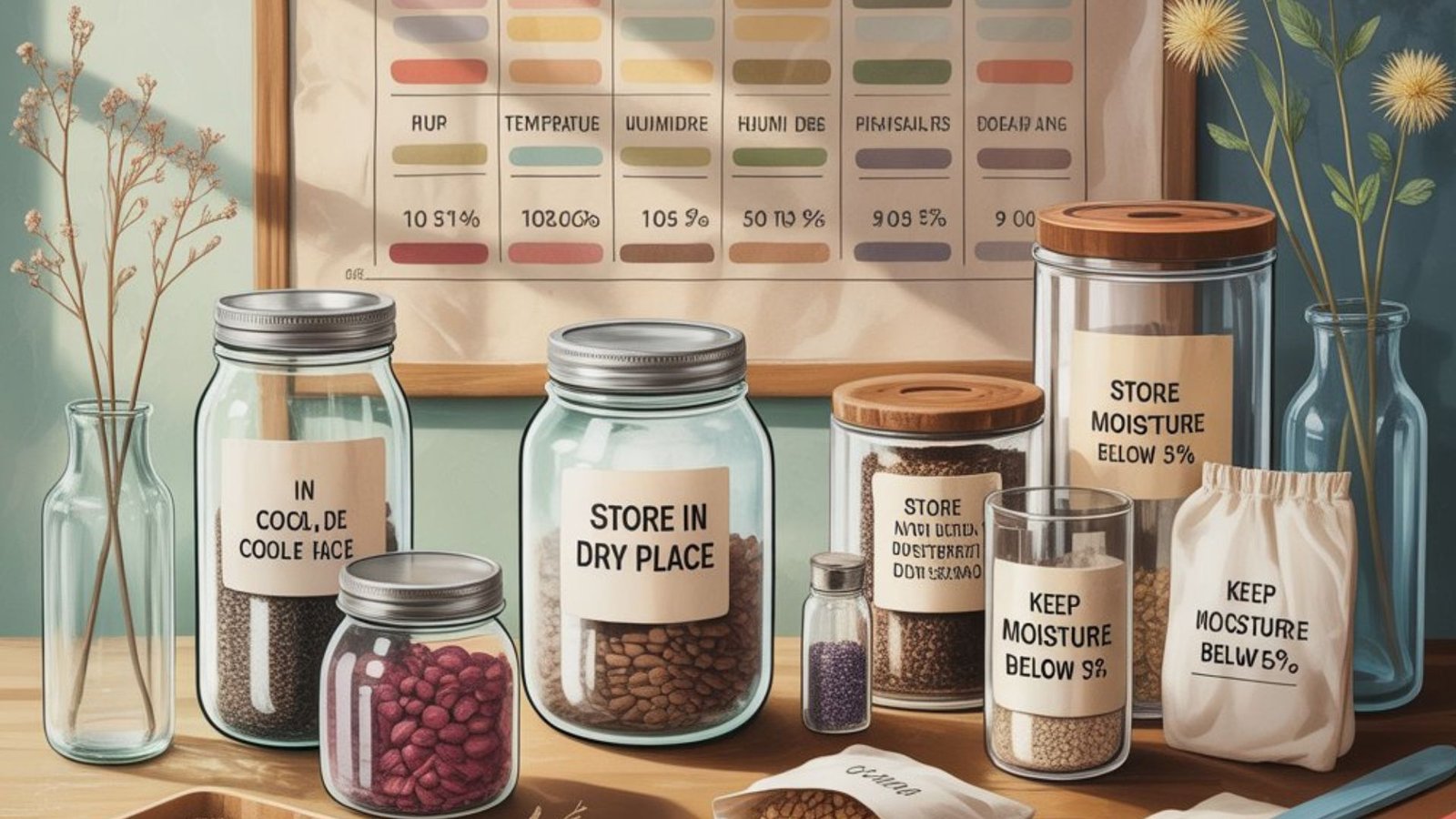
Not all seeds last the same amount of time. Understanding the **shelf life of seeds** helps you plan better. Here’s a quick table showing average longevity under good **seed storage life span** conditions:
| Seed Type | Average Lifespan |
| ————————- | —————- |
| Tomato, Cucumber, Lettuce | 4–6 years |
| Carrot, Spinach, Bean | 3–4 years |
| Onion, Parsnip, Leek | 1–2 years |
| Corn, Pea, Pumpkin | 2–3 years |
Remember, **seed viability over time** depends on how well you maintain **proper seed storage conditions**—temperature, dryness, and darkness are key.
How to Check Seed Viability with a Germination Test
The **seed germination rate test** is the most reliable way to determine whether your seeds can still sprout. It’s simple and can be done at home. Use the **germination test paper towel method** to find the percentage of viable seeds. If the number is above 70%, your seeds are good to plant.
You can also compare new and old seeds using this test. This helps you **maintain seed quality naturally** and predict the success of your next planting season. Always perform a test before sowing to avoid poor results.
Extra Tips for Managing and Reducing Leftover Seeds
If you have too many packets, consider **storing leftover garden seeds** properly. Share extras with friends or local seed swaps. You can also use old seeds for micro greens or indoor experiments. These simple steps help in **preventing seed rot and mildew** and reduce waste.
To further increase seed longevity, check containers every few months for moisture or **pests that damage stored seeds**. Refresh the **silica gel packs for seed storage** when they turn cloudy, indicating they’ve absorbed too much humidity.
Common Mistakes to Avoid When Storing Seeds
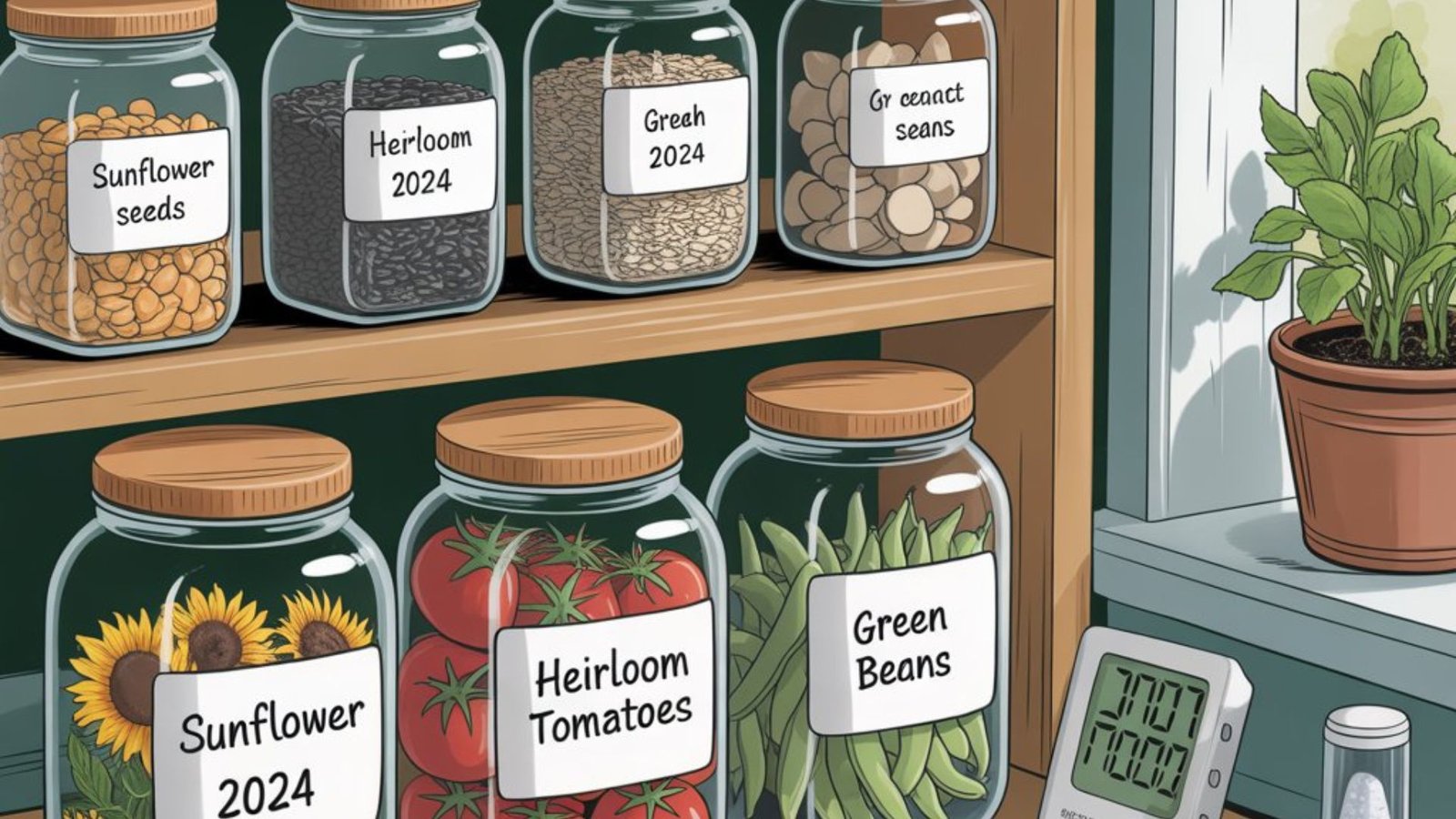
One of the most common **seed storage mistakes to avoid** is keeping seeds in warm, damp areas like kitchens or bathrooms. Another mistake is failing to seal containers tightly, which lets in air and moisture. Poor labeling also leads to confusion and lost seed varieties.
Never store seeds near fertilizers or chemicals, as fumes can damage them. Always ensure **temperature and humidity control for seeds** to protect them from rot or decay. Simple habits like this go a long way in **maintaining seed quality naturally** and ensuring success in the garden.
Conclusion
Learning **how to store seeds at home** is a rewarding part of gardening. When you use **airtight containers for seeds**, control moisture, and keep them **cool, dry, and dark**, you create perfect conditions for seed survival. The more care you put into storage, the better your seeds perform later. With good organization, **long-term seed storage** becomes easy, sustainable, and budget-friendly. So, start building your own **home seed bank ideas** today and enjoy fresh, healthy plants for years to come.
FAQs
Q 1 ; Can I store seeds in Ziploc bags?
Yes, you can store seeds in Ziploc bags if they’re completely dry and kept in a cool, dark place to prevent moisture buildup.
Q 2 : Is it good to store seeds in the fridge?
Storing seeds in the fridge can help extend their life, but they must be sealed in an **airtight container for seeds** to avoid condensation.
Q 3 : Will 20 year old seeds grow?
It’s rare, but some may sprout if stored under **proper seed storage conditions**, though most lose viability long before that.
Q 4 : Do you need to dry seeds before storing them?
Absolutely. **Dry seeds for storage** thoroughly to prevent mold, rot, or premature germination.
Q 5 : Why is it illegal to save seeds?
It’s only illegal to save **patented or hybrid seeds** protected by intellectual property laws; traditional or heirloom seeds can be saved freely.